Let’s Be Honest About What Blogging Actually Requires
A lot of people start a blog thinking good writing is enough. It isn’t. And an equal number spend months learning tools, design, and social media before publishing a single post — which is also the wrong move.
Blogging in 2026 sits at the intersection of writing, SEO, research, and consistency. The good news is you don’t need to master all of it upfront. You need to get the core skills right and build from there.
This guide tells you exactly which skills matter, which ones can wait, and what order to learn them in.
Skill 1: Writing Clearly (Not Beautifully)
The first thing to drop is the idea that you need to be a great writer to blog successfully. You don’t. You need to be a clear one.
Clear writing means:
- Using simple language your reader doesn’t have to decode
- Getting to the point without unnecessary buildup
- Structuring your answer so the reader can actually follow it
The blogs that rank and retain readers aren’t the ones with the most elegant prose. They’re the ones that explain things well and make the reader feel like they got what they came for.
If you can explain something to a friend without confusing them, you can write a blog post. Start there.
Skill 2: Keyword Research
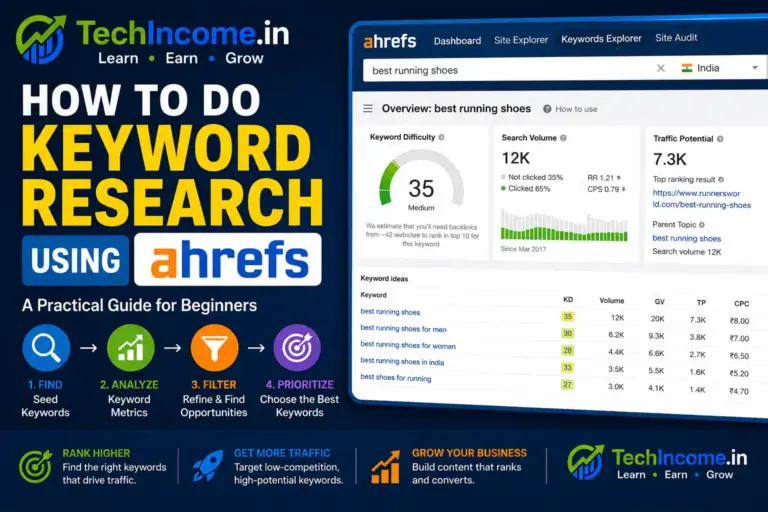
This is the skill that determines whether anyone ever sees your content. You can write the best article on a topic and it still gets zero traffic if nobody is searching for it — or if the people who are searching for it are landing on pages from websites with 10x your authority.
Keyword research helps you find topics where:
- People are actually searching
- The competition is beatable
- The search intent is clear
Tools like Ahrefs and Google Keyword Planner are where you do this work. Focus on long-tail keywords — 3 to 5 word phrases — with low keyword difficulty scores. For a new blog, that typically means KD under 20.
This is the one skill that has the highest return on investment early on. A week of good keyword research can set your content direction for months.
Skill 3: SEO Basics
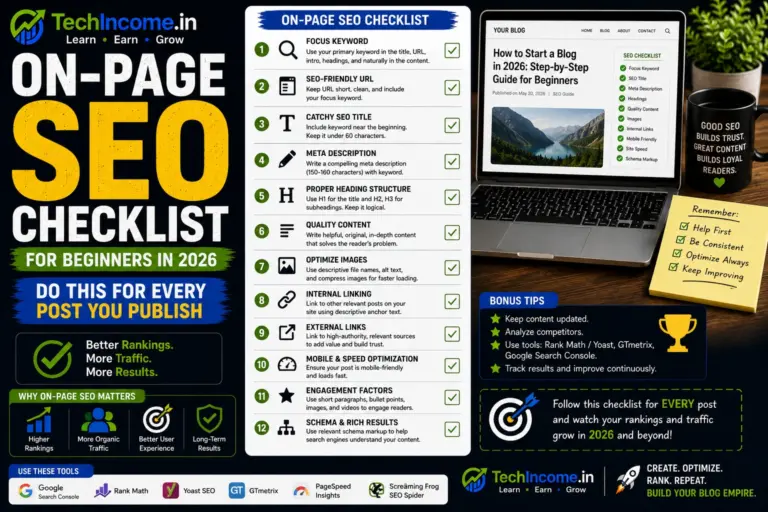
SEO sounds intimidating, but for a beginner blogger, it comes down to a handful of things done consistently:
- Put your target keyword in your title and first paragraph
- Write a clear meta description that matches what the article delivers
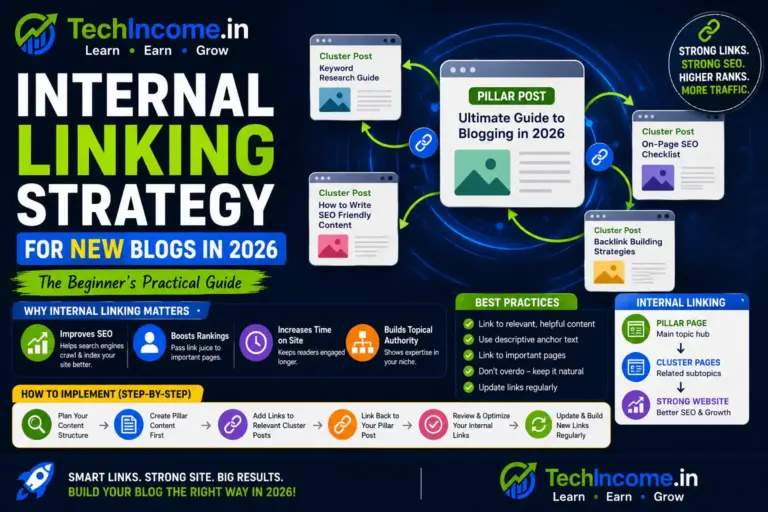
- Link to your other relevant posts (internal linking)
- Structure your content with proper headings (H2, H3) so it’s easy to scan
Install Rank Math on your WordPress site — it guides you through on-page SEO for every post and tells you what’s missing before you publish. You don’t need an SEO course to get started. You need the plugin and the habit of using it.
Don’t try to learn advanced SEO before you’ve published 10 posts. Get the basics right first.
Skill 4: Understanding Search Intent
This one is underrated and overlooked by most beginner bloggers. Search intent is the why behind a search query — and if your content doesn’t match that why, Google won’t rank it, regardless of how well-written it is.
Two types you’ll deal with most often:
Informational intent — the reader wants to learn something. “How to do keyword research,” “what is search intent,” “how long does it take to make money blogging.” These are how-to and explainer articles.
Commercial intent — the reader is comparing options or close to making a decision. “Best blogging tools,” “Rank Math vs Yoast,” “best hosting for beginners.”
Before you write any article, be clear on which type of search it is — and write accordingly. An informational article disguised as a product comparison won’t rank. Neither will a product recommendation hidden inside a tutorial.
Skill 5: Consistency (The One Most People Quit On)
This is probably the most important skill on this list, and it has nothing to do with writing or SEO. It’s about showing up when results aren’t visible yet.
Most blogs take 6–12 months to see meaningful traffic. That’s not a flaw in the process — that’s how it works. Google takes time to crawl, index, and trust new content. If you publish 5 posts and check your analytics every day for a month expecting thousands of visitors, you’re going to quit.
The bloggers who succeed are the ones who keep publishing — consistently, not frantically. Two posts a week for 6 months will beat 20 posts in January followed by nothing.
Set a realistic schedule. Stick to it. Trust the compounding.
Skill 6: Structuring Content Well
Good structure isn’t just about aesthetics — it directly affects how long people stay on your page, and Google pays attention to that.
A solid structure for most blog posts looks like:
- Introduction that confirms the reader is in the right place
- H2 and H3 sections that break the content into scannable chunks
- Examples that make abstract points concrete
- Action steps that tell the reader what to do next
Most readers scan before they read. If your post is one long block of text with no headings or visual breaks, they’ll leave in 10 seconds. Structure keeps them on the page long enough to actually read.
Skill 7: Basic WordPress and Plugin Knowledge
You don’t need to know how to code. You need to know how to use WordPress without it overwhelming you.
Specifically:
- Setting up and customizing a lightweight theme (Kadence is a good starting point)
- Installing and configuring your essential plugins (Rank Math, caching, security)
- Publishing, formatting, and editing posts
- Managing categories and internal links
This is learnable in a week of hands-on practice. Don’t spend more time here than necessary — the goal is a functional site, not a perfect one.
Skill 8: Knowing How Monetization Works (Even Before You Monetize)
You don’t need to monetize immediately, but understanding how blogs make money will shape the decisions you make from day one — which topics you cover, which keywords you target, what kind of content you write.
The three main revenue streams for bloggers:
Google AdSense — display ads. Works on traffic volume. Not the highest paying but passive.
Affiliate marketing — you recommend products and earn a commission when someone buys through your link. Works best on commercial-intent content.
Digital products — ebooks, templates, courses. The highest margin option, but requires an audience first.
Knowing this early means you’ll naturally lean toward topics that have monetization potential, instead of writing purely informational content that’s hard to monetize later.
Skill 9: Thinking Analytically About Your Own Content
After you’ve been blogging for a few months, you’ll have data — which posts are getting traffic, which ones aren’t, where readers are dropping off. The skill here is being able to look at that data honestly and adjust.
Which posts are ranking on page 2? Update them with better content and stronger keyword targeting. Which posts are getting clicks but high bounce rates? The content probably isn’t matching the search intent. Which topics are driving more traffic than expected? Write more in that direction.
Analytics isn’t about obsessing over numbers daily. It’s about reviewing every 4–6 weeks and making informed decisions.
Skills You Can Skip for Now
A lot of beginner resources will tell you that you also need graphic design, video editing, advanced coding, and a strong social media presence. You don’t — at least not yet.
These are fine to add later if they fit your strategy. But they’re not what gets a new blog ranking or earning. Prioritize the skills above first.
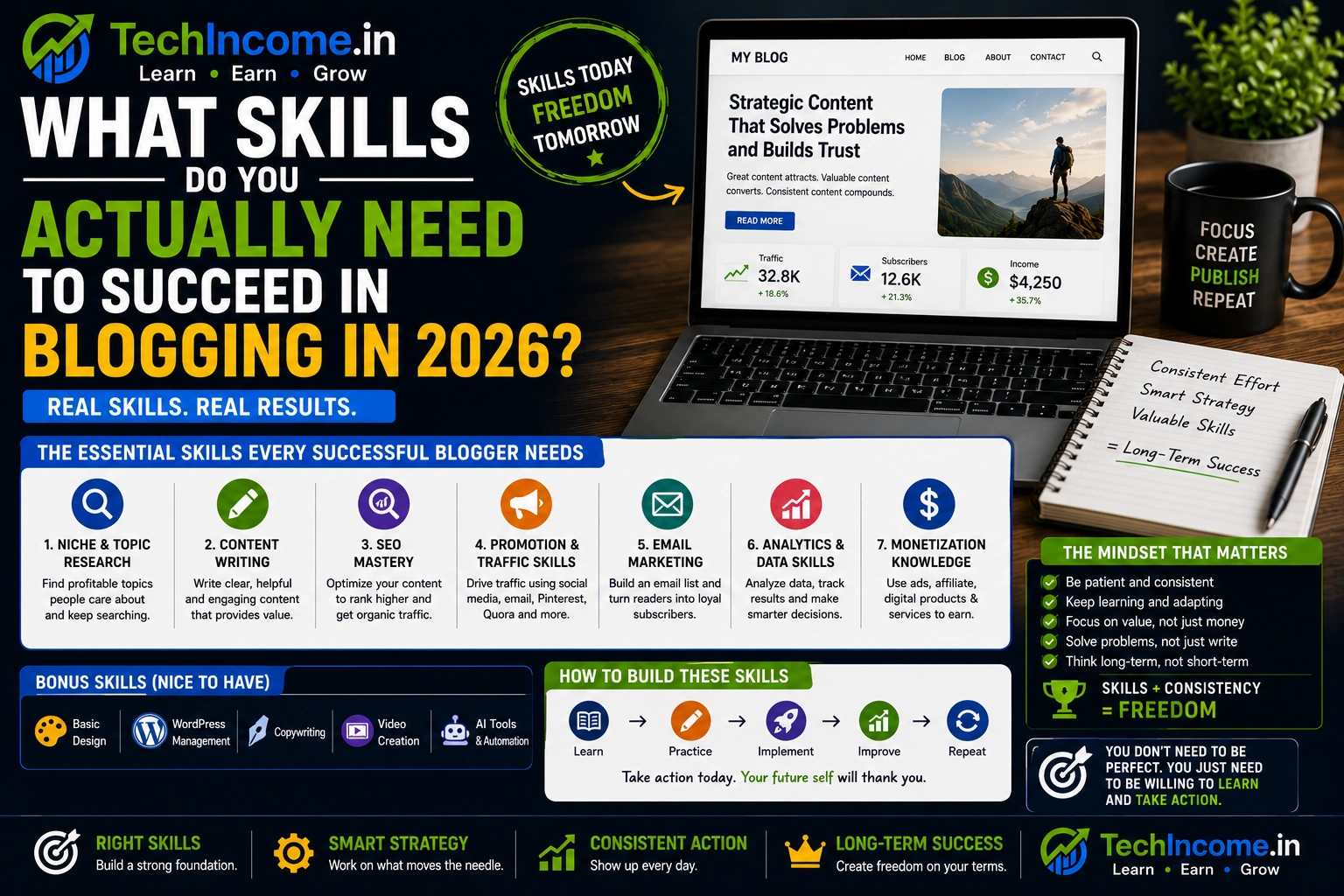
The Order to Build Them In
If you’re starting from zero, here’s the sequence that makes the most sense:
- Writing clearly and structuring content well
- Keyword research — so you’re writing about things people are actually searching for
- SEO basics — so that content has a chance of ranking
- Understanding search intent — so you write the right type of content for each keyword
- Consistency — sustained publishing over 6+ months
- Analytics and refinement — improving what’s already published
Don’t try to develop all of these simultaneously before you start. The best way to build these skills is by publishing real posts and learning from the results.
Common Mistakes That Slow Beginners Down
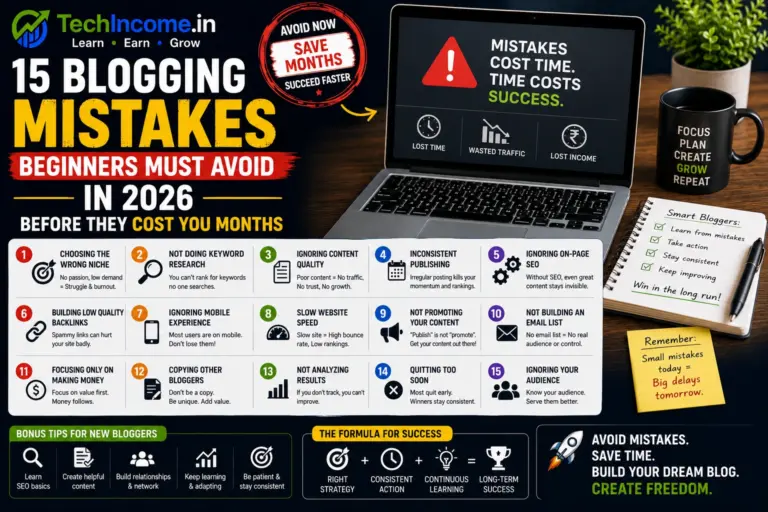
Learning tools before writing anything. You don’t need to master Ahrefs before your first post. Get writing.
Focusing on design over content. A beautiful site with 3 posts ranks nowhere. An average-looking site with 50 well-optimized posts can do serious numbers.
Ignoring SEO entirely. Writing without keyword research is like opening a shop in a location with no footfall. You control who can find you.
Quitting during the flat period. Every successful blog had a flat period. Most failed blogs quit during it.
- https://techincome.in/how-to-stay-consistent-blogging-2026/
- https://techincome.in/daily-routine-successful-blogger-2026/
- https://techincome.in/blogging-mistakes-beginners-avoid-2026/
- https://techincome.in/how-to-start-a-blog-in-2026-step-by-step-guide/
FAQs
-
Do I need to be a good writer to start a blog?
You need to communicate clearly — that’s different from being a “good writer.” If you can explain something in simple terms, you have enough to start. Writing improves with practice.
-
How long does it take to learn SEO as a beginner blogger?
The basics — keyword placement, meta descriptions, internal linking, search intent — can be picked up in a few days and refined over the first few months of publishing. You don’t need to master it before you start.
-
Is keyword research really that important?
Yes. It’s arguably the highest-leverage skill for a new blogger. Writing without keyword research means you’re hoping people find your content by accident. Keyword research tells you what people are actively searching for and whether you can rank for it.
-
How often should I publish as a beginner blogger?
Once or twice a week is a sustainable pace for most people. Quality matters more than frequency, but you do need volume — aim for at least 30–50 well-optimized posts before expecting serious traffic.
-
Can I learn all these skills simultaneously?
You don’t need to. Focus on writing and keyword research first. The other skills layer in naturally as you publish more content. Trying to master everything before starting is one of the most common reasons people never actually launch.
-
When should I start thinking about monetization?
Understand it from day one — it shapes your topic selection and keyword choices. But don’t actively try to monetize until you have consistent traffic, typically after 6–12 months and 30+ posts.
-
Do I need social media to grow a blog?
Not at the beginning. SEO-driven traffic is more sustainable and doesn’t require you to build multiple platforms at once. Social media can complement your blog later, but it’s not a blogging skill you need on day one.