
Why Most New Blogs Don’t Make It Past 6 Months
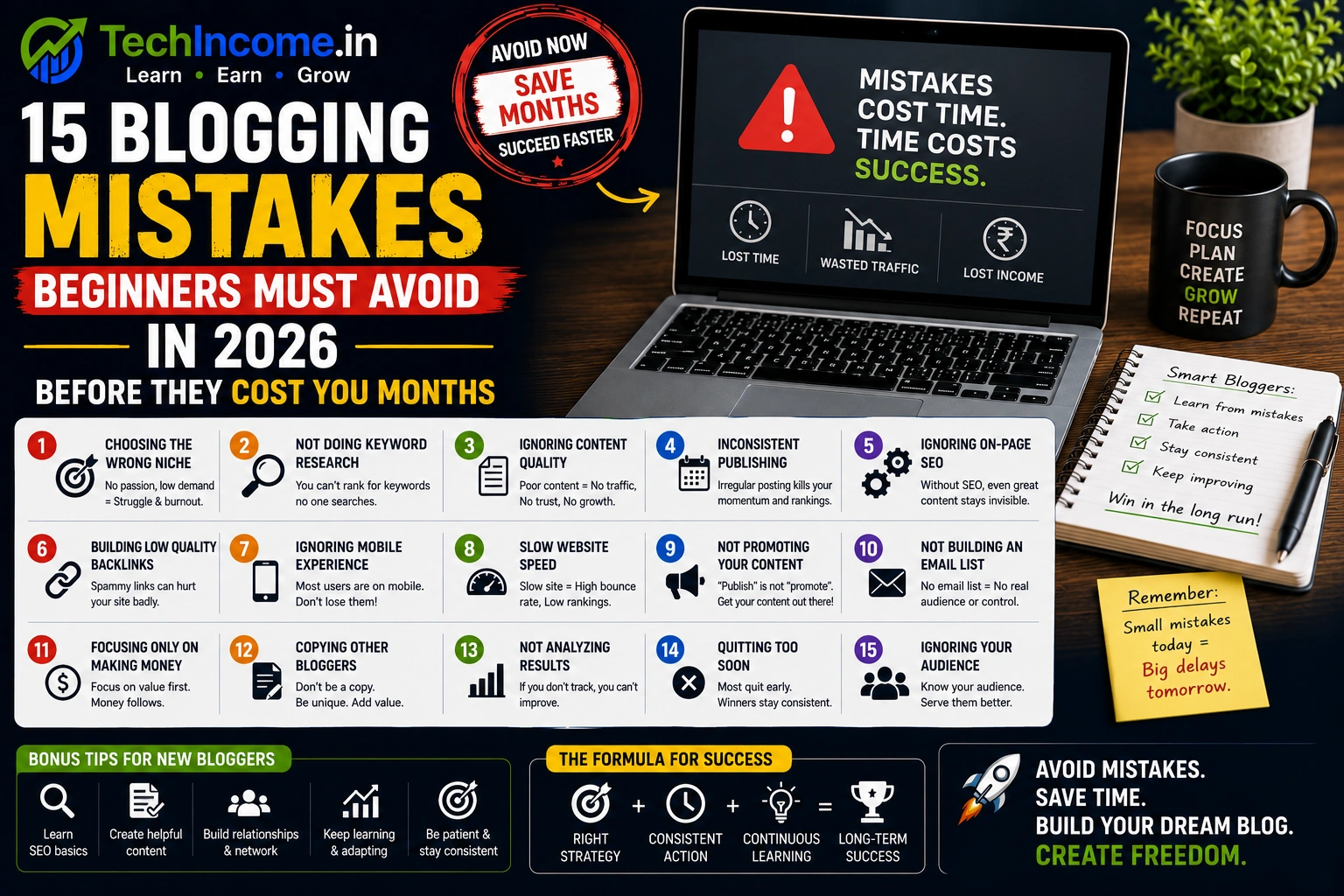
If you look at the blogs that failed, most of them didn’t fail because the writer wasn’t talented. They failed because of the same set of mistakes — wrong niche, no SEO, inconsistency, and unrealistic expectations about how long this takes.
In 2026, the bar for ranking is higher than it was even two years ago. Google is filtering out thin, generic, low-effort content more aggressively. That means the cost of these mistakes is steeper. The good news is they’re all predictable — and fixable before they waste months of your time.
Mistake 1: Picking a Niche That’s Too Broad
“I’m going to blog about technology.” “I want to write about lifestyle.” These niches sound reasonable, but they’re essentially undirected. You’re competing with publications that have been covering those topics for a decade with hundreds of writers.
A focused niche gives Google a clear signal about what your site is about. It also gives readers a reason to return — they know exactly what to expect from you.
Compare these:
- Too broad: “Tech”
- Focused and winnable: “AI tools for freelancers in India”
The second one has a specific audience, a specific problem, and far less competition. Start narrow. You can always expand once you’ve built authority in one area.
Mistake 2: Writing Posts Without Checking Search Intent
This is one of the most damaging mistakes, and it’s invisible until you check your analytics. You can write a genuinely well-researched, well-structured article — and it still won’t rank because the format doesn’t match what the searcher actually wants.
Someone searching “best laptops for blogging” wants a list with comparisons and recommendations, not a history of laptop evolution. Someone searching “how to write a blog post” wants a step-by-step guide, not a motivational essay.
Before you write anything, search the keyword yourself. Look at what the top 5 results are doing — their format, their depth, their angle. That’s what Google has determined matches the intent. Your content needs to fit that pattern while being more useful.
Mistake 3: Publishing Thin, Surface-Level Content
A 500-word post that skims the surface of a topic isn’t going to rank in 2026. Google’s quality signals have become sophisticated enough to filter this out, and readers will leave immediately if they don’t find what they were looking for.
Thin content looks like:
- A generic overview with no real depth
- A rewrite of what’s already on the first page of Google
- Bullet points with no explanation or context
What actually works is content that fully solves the problem the searcher has. That usually means 1,000–2,000+ words with step-by-step guidance, real examples, and answers to the follow-up questions readers naturally have. Not long for the sake of being long — complete for the sake of being useful.
Mistake 4: Using AI Content Without Adding Anything to It
AI writing tools are genuinely useful for bloggers — but they’re a starting point, not a finished product. Unedited AI output tends to be generic, safe, and devoid of any perspective that makes a reader feel like there’s a real person behind the content.
The problem with publishing raw AI content isn’t just quality. It’s that everyone else in your niche can generate the same article with the same tool. There’s no differentiation, no trust, no reason for a reader to choose your blog over anyone else’s.
Use AI to speed up drafting or structure your outline. Then go in and add your own perspective, real examples, specific context for your audience, and anything that makes the content feel like you wrote it. That combination — efficiency plus originality — is what works.
Mistake 5: Ignoring SEO Completely (or Doing It Wrong)
Some beginners ignore SEO entirely and hope their writing will speak for itself. Others go in the opposite direction and keyword-stuff every paragraph until the content reads like a robot wrote it. Both approaches hurt you.
SEO basics for a beginner blogger are straightforward:
- Target keyword in the title and naturally in the first paragraph
- Proper heading structure (H2 for main sections, H3 for sub-sections)
- A meta description that accurately describes what the article delivers
- Internal links to relevant posts on your site
That’s the foundation. Install Rank Math on your WordPress site — it walks you through this checklist for every post before you publish. Don’t overcomplicate it beyond these fundamentals until you have 20+ posts published.
Mistake 6: Targeting Keywords You Have No Chance of Ranking For
A new blog with no backlinks and low domain authority cannot rank for “make money online” or “best credit cards in India.” Those keywords are locked up by sites that have been building authority for years with thousands of backlinks.
This doesn’t mean you can’t eventually go after competitive keywords. It means you need to build toward them. Start with long-tail keywords — 3 to 5 word phrases with lower search volume and keyword difficulty scores under 20. Win those first. Build traffic and authority. Then gradually target more competitive terms.
Trying to compete for top keywords on day one is like a new restaurant trying to win a Michelin star before it’s served its hundredth customer.
Mistake 7: Publishing Posts That Don’t Link to Each Other
Every post you publish in isolation is a missed opportunity. Internal linking — connecting related posts to each other — does two things: it helps readers navigate your site and find more of your content, and it signals to Google how your content is structured and related.
A blog where every post stands alone is a collection of disconnected articles. A blog where posts link to each other around related topics is a content ecosystem — and Google ranks ecosystems higher than isolated pages.
As you publish, maintain a habit of going back to older posts and linking new ones in. Build your content around topic clusters where a main pillar article links to several supporting pieces, and those pieces link back.
Mistake 8: Publishing in Bursts, Then Disappearing
The pattern is recognizable: five posts in the first week (high motivation), then nothing for three weeks (reality sets in), then two posts, then another long gap. This doesn’t build anything.
Consistent publishing — even one solid post a week — will outperform sporadic bursts every time. It gives Google a signal that your site is active. It gives readers a reason to return. And it compounds over time in a way that bursts simply don’t.
Set a schedule you can realistically maintain given your other commitments. Two posts a week is ideal. One well-researched post a week is better than five rushed ones. The only publishing mistake worse than inconsistency is quitting.
Mistake 9: Expecting Results in the First 3 Months
This expectation gap is one of the most common reasons blogs get abandoned. Someone publishes 15 posts, checks their analytics after two months, sees 40 visitors, and concludes blogging doesn’t work.
Here’s a more accurate picture of what to expect:
- 0–3 months: Almost no traffic. Google is crawling and indexing your content but hasn’t established trust in your site yet.
- 3–6 months: Early signs of traction — a few posts start showing up on page 2 or 3 for target keywords.
- 6–12 months: If you’ve been consistent and strategic, real traffic growth starts. Some posts break onto page 1.
The bloggers who succeed are the ones who treat months 1–6 as investment months, not evaluation months. Keep publishing. The results come later.
Mistake 10: Neglecting the Reader’s Experience on Your Site
You can have excellent content and still lose readers within seconds because the site is slow, the layout is cluttered, or the text is hard to read on a phone. User experience is not just a design preference — it’s a ranking factor.
Simple fixes that make a significant difference:
- Use a lightweight theme like Kadence that loads fast on mobile
- Break up long paragraphs — 2 to 3 sentences is usually the right length for online reading
- Use enough white space so the page doesn’t feel overwhelming
- Test your site on your phone, not just your laptop
Most of your readers are on mobile. If your site is difficult to navigate on a phone screen, you’re losing them before they finish the first paragraph.
Mistake 11: Having No Monetization Plan
Many bloggers publish for months without thinking about how the blog will actually make money. Then when they’re ready to monetize, they realize their content isn’t structured in a way that leads anywhere.
You don’t need to monetize from day one. But you should know your plan from day one, because it shapes everything — what topics you cover, what keywords you target, what kind of audience you build.
The three main options for beginner bloggers are Google AdSense (display ads, works on traffic volume), affiliate marketing (recommending products and earning commissions), and digital products (ebooks, templates, courses). Most successful blogs eventually use a combination of all three.
Mistake 12: Writing for Search Engines Instead of People
There’s a version of SEO-focused writing that completely backfires — robotic, keyword-heavy content that technically checks all the SEO boxes but is unpleasant to actually read. Google has become very good at detecting this, and readers certainly notice it.
Write as if you’re explaining something to a friend who’s smart but unfamiliar with your topic. Answer the question completely. Use examples. Let the keyword appear naturally in the places it makes sense. The goal is a post that ranks because it’s the most genuinely helpful result — not because the keyword appears 15 times.
Mistake 13: Missing the Trust Pages
If you want to monetize your blog through AdSense or affiliate programs, or if you simply want readers to trust you, certain pages are non-negotiable:
- About — who you are and what this blog is about
- Contact — how people can reach you
- Privacy Policy — legally required in most regions
- Disclaimer — essential if you publish affiliate links
These pages take a few hours to create. Skipping them can get your AdSense application rejected and makes your site look unfinished to anyone who checks before linking to you or working with you.
Mistake 14: Installing Too Many Plugins
WordPress’s plugin library is enormous, and it’s tempting to install one for every feature you want. The problem is that each plugin adds load time, potential conflicts with other plugins, and security vulnerabilities.
A beginner blog needs around 5–8 plugins maximum. The essentials are an SEO plugin (Rank Math), a caching plugin for speed, and a basic security plugin. Everything else should earn its place. If a plugin is solving a problem you don’t actually have yet, don’t install it.
Mistake 15: Publishing Random Posts With No Strategy
If you’re publishing whatever topic feels interesting that week, with no connection between posts and no keyword research guiding the decisions, you’re building a collection of random articles instead of a blog with authority.
Google rewards topical depth. A blog with 30 well-connected articles on freelancing for beginners in India will rank significantly better than a blog with 100 posts covering freelancing, cooking, travel, tech reviews, and personal updates.
Build a content plan before you start publishing. Group your keywords into clusters around a central topic. Every post should belong somewhere in that structure.
What to Do Instead — The Simple Version
Before publishing any post, run it through this checklist:
- Does this target a specific keyword with beatable competition?
- Does the format match the search intent?
- Is it complete — does it fully answer what the searcher is looking for?
- Are there internal links to and from other relevant posts?
- Have I applied on-page SEO without overdoing it?
If the answer to all five is yes, publish it. Then repeat that 30 times.
Recommended Next Reads:
- How To Stay Consistent in Blogging in 2026
- Daily Routine Successful Blogger in 2026
- Write SEO Blog posts that rank 2026
- How to start a Blog in 2026 step by step Guide
FAQs
-
How many posts should I publish before my blog starts getting traffic?
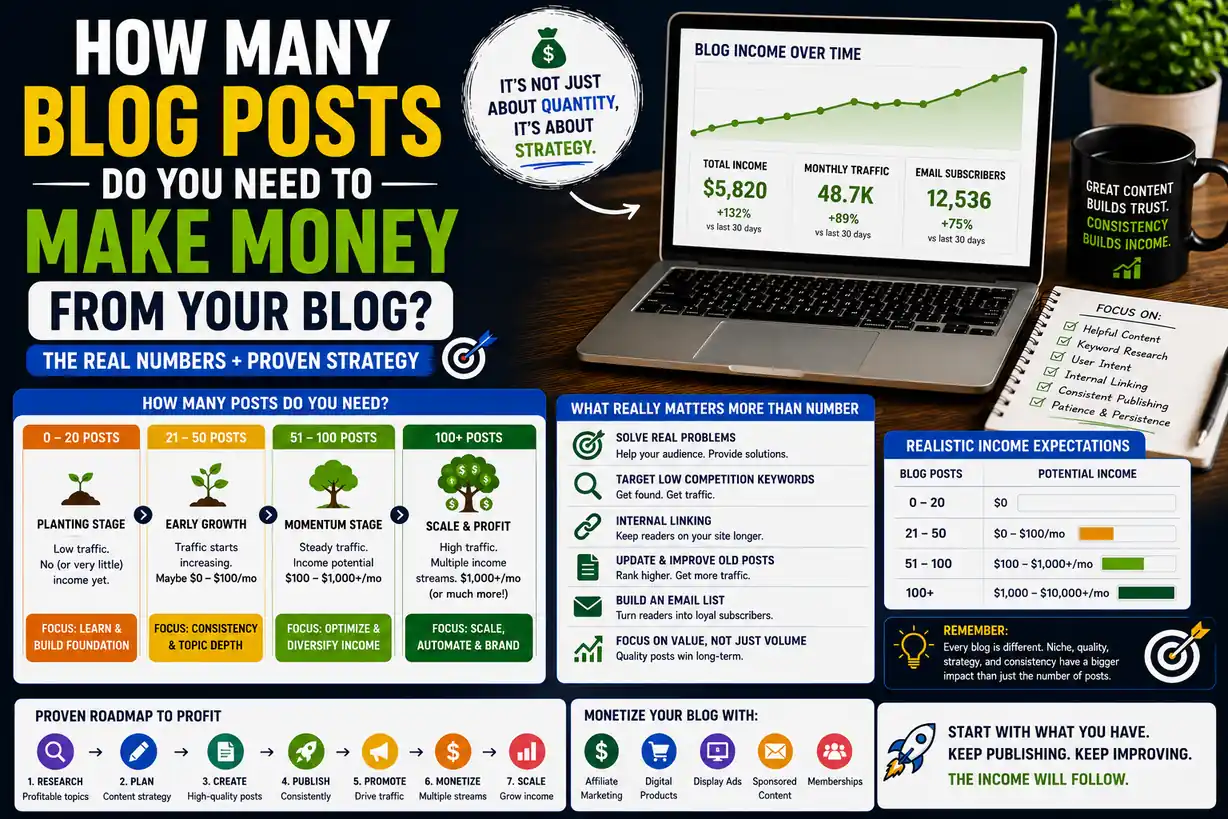
There’s no exact number, but 30–50 well-targeted posts in a focused niche is when most blogs start seeing consistent organic traffic. The quality and keyword targeting of each post matters more than hitting a specific count quickly.
-
Is it too late to start a blog in 2026?
Not if you’re strategic about it. Broad niches are more competitive, but focused sub-niches — especially India-specific content — still have significant gaps. A well-planned blog in a specific niche can still rank and earn in 2026.
-
How do I know if my content is too thin?
Read the top 3 articles ranking for your target keyword. If your post covers significantly less ground, has no examples, and could be summarized in 2 sentences, it’s too thin. Your post should be the most complete, useful answer to that search query on the first page.
-
Can I use AI writing tools without hurting my rankings?
Yes — if you use them as a drafting aid and then meaningfully edit and improve the output. AI-generated content that’s published as-is, without any original perspective or added value, tends to perform poorly in rankings and reader engagement.
-
How important is internal linking for a new blog?
Very. It’s one of the easiest SEO wins available to you and most beginners ignore it. Start building internal links from your first few posts, and make a habit of going back to older posts to link to newer ones when they’re relevant.
-
What’s the most common reason bloggers quit?
Unrealistic expectations about the timeline. Most bloggers quit within the first 3–6 months — exactly when results are about to start appearing. If you understand that the first 6 months are an investment period with low visible return, you’re far less likely to quit during it.
-
Should I focus on fixing old posts or publishing new ones?
Both, but in the right order. For the first 3–6 months, focus on publishing new content to build volume. After that, start reviewing older posts and improving the ones that are ranking on pages 2 and 3 — those are the easiest wins for boosting traffic.