Can I tell you something that most certification guides don’t?
A certification, by itself, doesn’t get you hired. A certification gets your resume past the first filter. What happens in the interview — the real-world questions, the scenario-based problems, the “walk me through how you’d solve this” moments — that’s where actual skills determine your fate.
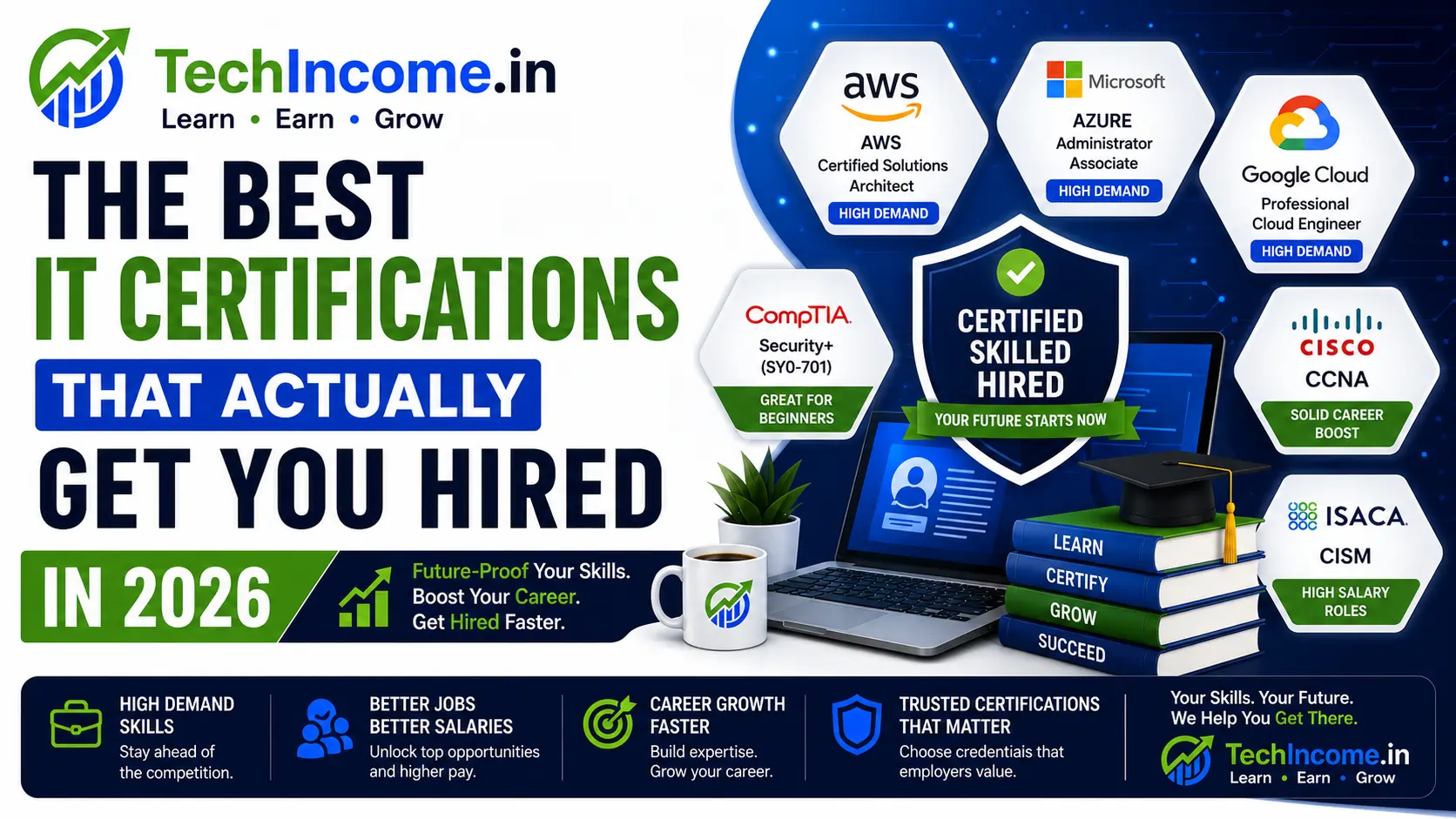
I’m starting with that because it frames everything that follows. This isn’t a list of certifications that sound impressive or are technically in demand somewhere in the world. This is a guide to the certifications that Indian hiring managers, ATS systems, and technical interviewers at IT services companies, product firms, and GCCs are specifically looking for in 2026 — combined with an honest take on what each one gets you, what it doesn’t, and how much it costs versus what it returns.
Reality check before we dive in: employers use certifications as filters. Without them, your resume can get auto-failed by Applicant Tracking Systems before a human ever reads it. The goal of this article is to tell you exactly which certifications pass that filter most reliably — and what to do alongside them to make sure you actually get hired once you’re through.
Let’s go.
Why Certifications Matter More in India in 2026 Than They Did Three Years Ago
The hiring landscape in Indian IT has shifted in a way that makes certifications more consequential than before — not less.
According to the Taggd India Decoding Jobs Report 2026, demand for advanced digital skills has grown 42% year on year, and more than 80% of employers now prefer practical, project-based skills over just degrees. That last part is important — it’s not that degrees don’t matter, it’s that a degree without demonstrable skills is increasingly insufficient.
What’s filling that gap? Certifications and portfolios. Together.
India’s IT and Enabled Services sector is expected to witness a 20% increase in job opportunities in 2026, with emerging technologies leading to a 75% increase in roles in AI, cybersecurity, and cloud computing specifically. That’s where the hiring is concentrated — and those three domains are also where the most respected certifications sit.
Certifications can boost salary by 20 to 30 percent over uncertified peers, and in some specialisations — particularly CISSP for security and AWS Professional for cloud — the premium is even higher. That’s a meaningful return on a few months of focused preparation and ₹15,000–₹35,000 in exam fees.
One more thing before the list: I’ve organised this by career stage and by domain, because the right certification depends entirely on where you are right now. A CISSP is worthless without 5 years of experience. An AWS Cloud Practitioner is too basic for someone with 4 years in cloud. Know your level and pick accordingly.
The Certifications Worth Pursuing in 2026
☁️ Cloud Computing Certifications
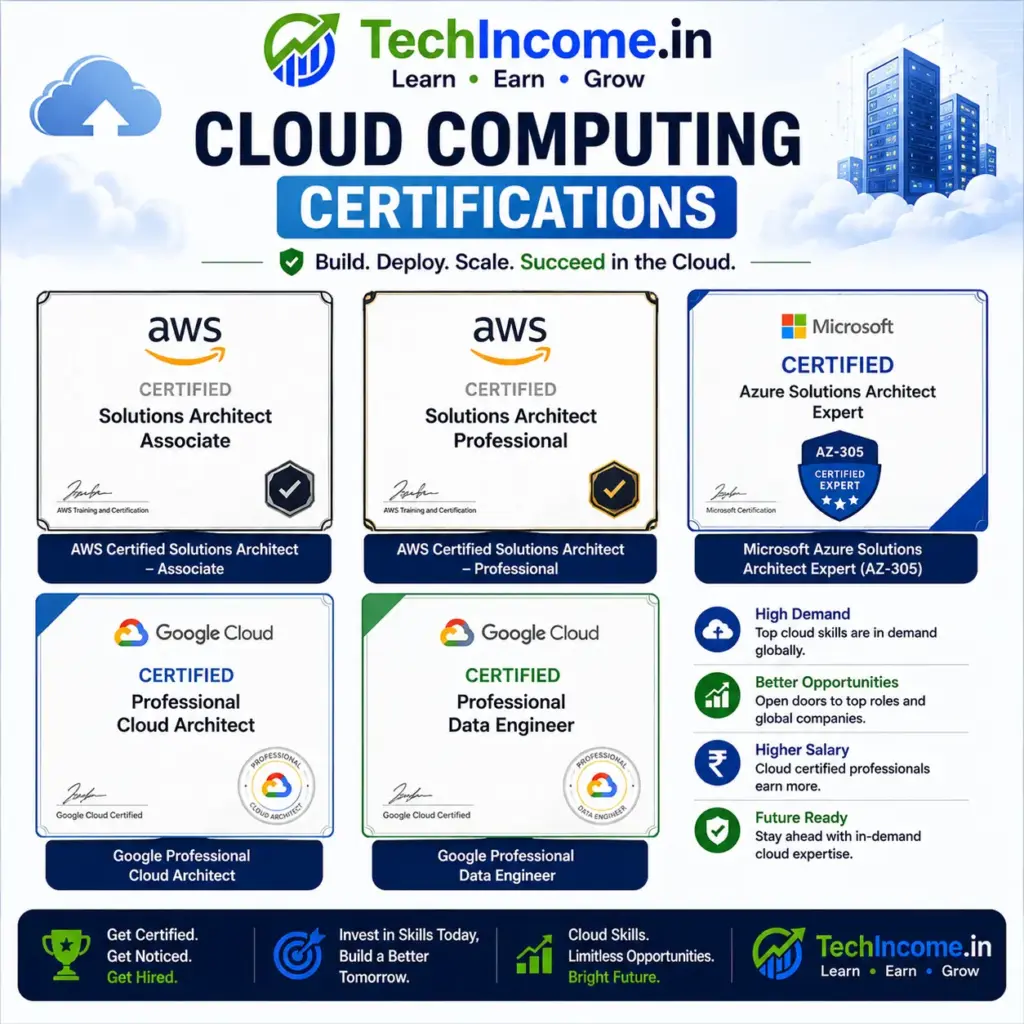
1. AWS Certified Solutions Architect – Associate
Best for: Freshers and early-career professionals aiming for cloud roles Exam fee in India: ₹20,000–₹22,000 Preparation time: 8–12 weeks (2 hours/day) Salary range after certification: ₹8–18 LPA (fresher to mid-level)
AWS Certified Solutions Architect – Associate is a core credential for cloud architects and engineers and one of the most consistently requested certifications across hiring data in 2026.
Here’s why this one tops the list.
AWS controls approximately 32% of global cloud market share. In India, AWS is the most actively used cloud platform at product companies, GCCs, and increasingly at mid-size businesses that are moving off on-premise infrastructure. When an Indian hiring manager filters resumes for cloud roles, AWS Solutions Architect – Associate is the most commonly searched certification in their ATS.
What the certification actually covers: designing available, cost-efficient, fault-tolerant systems on AWS. Core services — EC2, S3, RDS, VPC, IAM, Route 53, CloudFront, Lambda — are covered in detail. You’ll understand how to architect a three-tier web application, how to design for high availability, how to think about data storage options for different workloads, and how to make cost-versus-performance trade-offs.
What it actually proves to a hiring manager: You understand enough about AWS to have an architectural conversation, not just follow documentation. That’s a meaningful distinction from someone who claims “AWS experience” on their resume without a certification.
How to prepare: Stephane Maarek’s AWS Solutions Architect course on Udemy (updated frequently, genuinely excellent) paired with Tutorials Dojo practice exams is the combination that Indian candidates consistently report works best. Score consistently above 80% on practice exams before booking the real one.
The important caveat: This certification on its own is not sufficient. You need hands-on projects — a VPC you’ve built yourself, a three-tier application you’ve deployed, an auto-scaling setup you’ve configured and tested. The certification proves knowledge; the projects prove ability. Hiring managers at product companies expect both.
2. AWS Certified Solutions Architect – Professional
Best for: Mid-career cloud professionals (3–5 years experience) targeting senior roles Exam fee in India: ₹35,000–₹38,000 Preparation time: 3–5 months (already holding the Associate level) Salary range: ₹20–45 LPA
This is the certification that separates cloud engineers from cloud architects in the hiring process.
The Professional level is significantly harder than Associate. It tests your ability to handle complex, multi-service architectural scenarios — migrations, disaster recovery, multi-account strategies, complex networking, cost optimisation at scale. You won’t pass this by memorising services. You need to have actually operated cloud systems to reason about the questions correctly.
AWS controls 32% of the cloud market and companies need architects who can design scalable systems — the Professional certification signals to employers that you can handle that complexity.
At mid-to-senior level, this certification directly impacts compensation in a way the Associate level doesn’t. A Cloud Engineer moving from IT services to a product company or GCC with AWS Professional on their resume can reasonably negotiate 30–50% higher than their current package. It’s the single most impactful cloud certification for career progression in India right now.
3. Microsoft Azure Solutions Architect Expert (AZ-305)
Best for: Cloud professionals targeting BFSI, enterprise, and Microsoft-heavy organisations Exam fee in India: ₹13,500–₹15,000 per exam (two exams required: AZ-104 + AZ-305) Preparation time: 3–6 months total Salary range: ₹18–40 LPA
95% of Fortune 500 companies use Azure, and enterprise cloud adoption drives strong demand for Azure-certified professionals.
In India specifically, Azure dominates in the banking, financial services, and insurance (BFSI) sector — because most large Indian banks and insurance companies have Microsoft-heavy IT estates (Active Directory, Office 365, SQL Server) that integrate naturally with Azure. If your target employers are in that space, Azure certification gives you a significant edge over AWS-only certified candidates.
The AZ-305 (Azure Solutions Architect Expert) requires passing AZ-104 (Azure Administrator) first, so this is a two-step journey. AZ-104 is roughly equivalent to AWS Solutions Architect Associate in scope. AZ-305 is roughly equivalent to AWS Solutions Architect Professional.
Both together cost about ₹27,000–30,000 in exam fees and take 4–6 months of preparation. The ROI is strong if you’re targeting BFSI, large enterprise GCCs, or consulting firms that work primarily with Microsoft clients.
4. Google Professional Cloud Architect
Best for: Data-focused cloud professionals, anyone targeting AI/ML cloud infrastructure Exam fee in India: ~₹19,000 Preparation time: 2–4 months (with existing cloud experience) Salary range: ₹18–40 LPA
Google Professional Cloud Architect is strong for multi-cloud and data-intensive AI projects, and Google Cloud grew 28% year on year — making it easier to stand out compared to AWS and Azure where the certified candidate pool is larger.
GCP’s sweet spot is data and AI. BigQuery (Google’s cloud data warehouse) is widely used by data engineering teams. Vertex AI is a leading platform for ML model training and deployment. If you’re building a career at the intersection of cloud and data — or cloud and ML — GCP knowledge adds genuine value that AWS alone doesn’t provide.
The smaller certified candidate pool also means differentiation is easier on GCP. An AWS certified professional is competing with hundreds of thousands of Indian candidates. A GCP-certified one has a significantly smaller peer group, which matters at the shortlisting stage.
5. Google Professional Data Engineer
Best for: Data Engineers specifically, anyone building cloud data pipelines Exam fee in India: ~₹19,000 Preparation time: 2–3 months (with data engineering experience) Salary range: ₹12–35 LPA
This is the most respected data engineering certification in the market right now. It covers BigQuery, Dataflow, Pub/Sub, Cloud Composer (managed Airflow), and Dataproc — the full GCP data ecosystem. It tests your ability to design, build, and maintain data pipelines and warehouses at scale.
The Google Professional Data Engineer certification is perfect for professionals in data engineering and machine learning — covering building data pipelines, data processing and analysis, and cloud integration for data storage — and is considered a rare course with high salary in India with an average salary of ₹7.5–20 LPA.
For Data Engineers specifically, this is the highest-signal certification you can have on your resume. It tells a hiring manager: you understand modern data infrastructure, you can work in cloud-native data environments, and you’ve invested enough to get formally validated. At mid-level, this certification combined with strong SQL and dbt skills can move your salary from ₹14 LPA to ₹22 LPA in a single job switch.
🔐 Cybersecurity Certifications
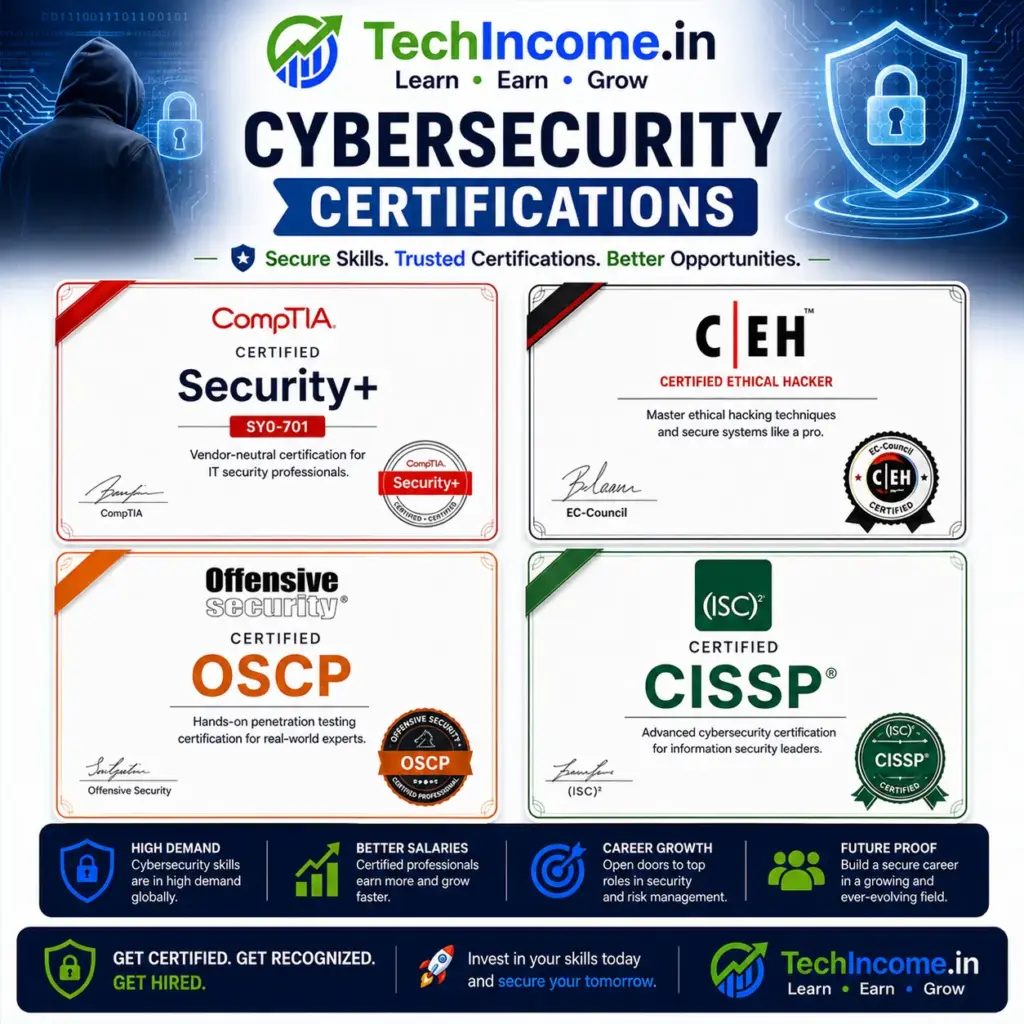
6. CompTIA Security+
Best for: Absolute beginners to cybersecurity, anyone wanting a vendor-neutral foundation Exam fee in India: ₹25,000–₹27,000 Preparation time: 6–10 weeks Salary range: ₹5–10 LPA (fresher with this cert)
CompTIA Security+ is a widely recognised baseline credential for security roles and consistently appears among the most requested certifications in job postings across cloud, cybersecurity, and general IT roles.
This is the certification I’d recommend to anyone who’s decided they want a cybersecurity career and doesn’t know where to start. It’s vendor-neutral — meaning it’s not specific to AWS or Microsoft or Cisco, but covers security concepts that apply everywhere. It’s accepted by Indian employers across IT services, BFSI, product companies, and government contractors as proof of foundational security knowledge.
The exam covers network security, threats and attacks, identity and access management, cryptography basics, risk management, and incident response fundamentals. It’s not easy — don’t let “foundational” fool you into underestimating it. But it’s achievable with consistent study over 6–10 weeks without prior security experience.
How to prepare: Professor Messer’s free Security+ course on his website is the most consistently recommended free resource. Jason Dion’s practice exams on Udemy are the most accurate simulation of the real exam. Study the theory, do the practice exams, understand why wrong answers are wrong — not just why right answers are right.
7. CEH – Certified Ethical Hacker
Best for: Anyone targeting ethical hacking, penetration testing, or red team roles Exam fee in India: ₹35,000–₹40,000 (with official training; varies for exam-only path) Preparation time: 8–12 weeks Salary range: ₹6–15 LPA (fresher to mid)
As cyber threats become more sophisticated, the demand for ethical hackers is soaring — companies need professionals who can proactively find weaknesses in their security before real attackers do, and CEH is a well-respected certification in the ethical hacking field.
CEH is the most commonly named certification in Indian job listings for ethical hacking and penetration testing roles. If you search “ethical hacker jobs India” on Naukri or LinkedIn, CEH appears in more job descriptions than any other credential in that category.
The honest critique of CEH is that it’s more theory-heavy than practical. It teaches you about hacking tools and concepts rather than testing you on actually using them. This is why OSCP (which we’ll cover below) is more respected by serious security practitioners. But for getting through Indian ATS filters and passing initial HR screening for ethical hacking roles, CEH does the job.
If budget is a constraint, the eJPT (eLearnSecurity Junior Penetration Tester) at approximately ₹8,000–10,000 is an excellent and more practical alternative for building early ethical hacking credentials. Many candidates do eJPT first, then CEH once employed.
8. OSCP – Offensive Security Certified Professional
Best for: Mid-career ethical hackers, anyone serious about penetration testing as a career Exam fee in India: ₹80,000–₹1,00,000 (includes lab access) Preparation time: 3–6 months of intensive preparation Salary range: ₹15–40 LPA
Let me be direct about this one: OSCP is hard. It’s a 24-hour practical exam where you’re given a set of intentionally vulnerable machines and you have to actually compromise them — document what you did, how you did it, and produce a professional penetration test report. No multiple choice. No memorisation. Just you, a terminal, and real systems.
That’s also exactly why it’s the most respected ethical hacking credential in the world.
An OSCP on your resume tells a hiring manager something that no other security certification does: this person has actually hacked systems under pressure, can document findings professionally, and has the problem-solving endurance to work through 24 straight hours of technical challenges. That’s not something you fake.
In India, OSCP holders at product companies and GCCs are commanding ₹20–40 LPA at mid-to-senior levels — and many report receiving interview calls within days of adding OSCP to their LinkedIn profile. It’s a rare credential in a field with genuine talent shortage.
Don’t attempt this as a beginner. Complete Security+ and CEH first. Do 60+ machines on TryHackMe and Hack The Box. Then come back to OSCP.
9. CISSP – Certified Information Systems Security Professional
Best for: Security professionals with 5+ years of experience, targeting architect and leadership roles Exam fee in India: ₹47,000–₹50,000 Preparation time: 4–6 months (with 5 years of experience already) Salary range: ₹25–60 LPA
Cybersecurity breaches cost companies $4.45 million on average according to IBM 2026, and CISOs specifically want CISSP-certified professionals to manage that risk — making CISSP the benchmark credential for mid-senior security positions.
CISSP is the most prestigious cybersecurity certification in the world. It covers 8 domains of security knowledge — risk management, security architecture, network security, identity management, software development security, and more. The exam is adaptive, 3–4 hours long, and notoriously difficult.
The mandatory requirement: 5 years of paid, full-time work experience in at least two of the eight CISSP domains. You can take and pass the exam without the experience, but you’ll be an “Associate of (ISC)²” until the experience requirement is met. Without the experience, don’t invest in CISSP yet — get CEH or OSCP first.
CISSP is one of the most respected IT certifications in cybersecurity, with certified professionals earning ₹12–30 LPA in India. At Security Architect and CISO levels, CISSP is effectively expected, not optional.
🤖 AI, Data Science & GenAI Certifications
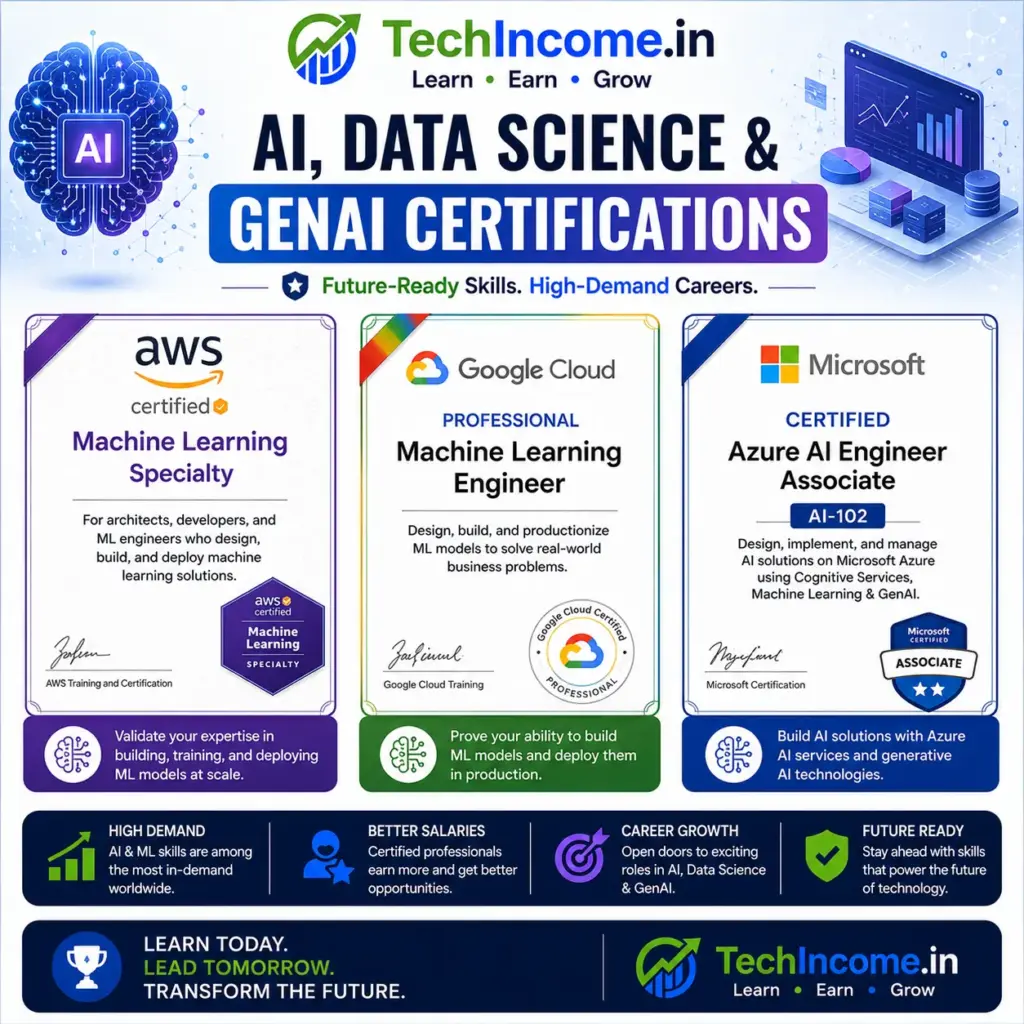
10. AWS Machine Learning Specialty
Best for: Data Scientists and ML Engineers targeting AWS-heavy organisations Exam fee in India: ₹35,000–₹38,000 Preparation time: 2–3 months (with ML and AWS experience) Salary range: ₹18–45 LPA
AI certifications are the fastest-growing salary boosters in tech in 2026 — companies need AI engineers urgently as the GenAI boom accelerates demand.
The AWS ML Specialty covers the full machine learning workflow on AWS — data preprocessing, model training and tuning with SageMaker, deployment, monitoring, and MLOps. It also covers when to use pre-built AWS AI services (Rekognition, Comprehend, Forecast) versus building custom models.
This is the right certification if your target companies use AWS as their primary cloud and you want to work in ML engineering or MLOps. It pairs well with Python ML skills and a SageMaker project portfolio.
11. Google Professional Machine Learning Engineer
Best for: ML Engineers and Data Scientists targeting GCP-heavy product companies and GCCs Exam fee in India: ~₹19,000 Preparation time: 2–3 months Salary range: ₹18–50 LPA
AI credentials such as Google Professional Machine Learning Engineer align directly with the current demand for combined data engineering, model lifecycle awareness, and responsible AI skills.
This certification covers model training and deployment on Google Cloud — Vertex AI, BigQuery ML, TensorFlow on GCP, MLOps pipelines, and model monitoring. It’s the most respected ML certification for GCP-focused roles.
The combination of Google Professional Data Engineer + Google Professional ML Engineer is arguably the most powerful two-certification stack for anyone building a career in data and AI infrastructure at product companies and GCCs. Both can be earned within a 6–8 month period and together signal to employers that you can own the full data-to-model pipeline.
12. Azure AI Engineer Associate (AI-102)
Best for: AI Engineers targeting Microsoft-heavy enterprises, BFSI, and consulting firms Exam fee in India: ~₹13,500 Preparation time: 6–8 weeks Salary range: ₹14–35 LPA
Azure AI Engineer is one of the most requested AI credentials in current hiring trends alongside AWS and Google ML credentials.
AI-102 covers building AI solutions on Azure — Azure OpenAI Service, Cognitive Services, Azure Bot Service, and implementing responsible AI practices. For anyone targeting AI engineering roles at companies that run on Azure (which includes a significant portion of India’s enterprise and BFSI sector), this certification is increasingly expected.
It’s also one of the more accessible AI certifications — the prerequisite knowledge is lighter than AWS ML Specialty or Google ML Engineer, making it a good first AI certification for someone transitioning from a general IT background into AI roles.
⚙️ DevOps & Infrastructure Certifications
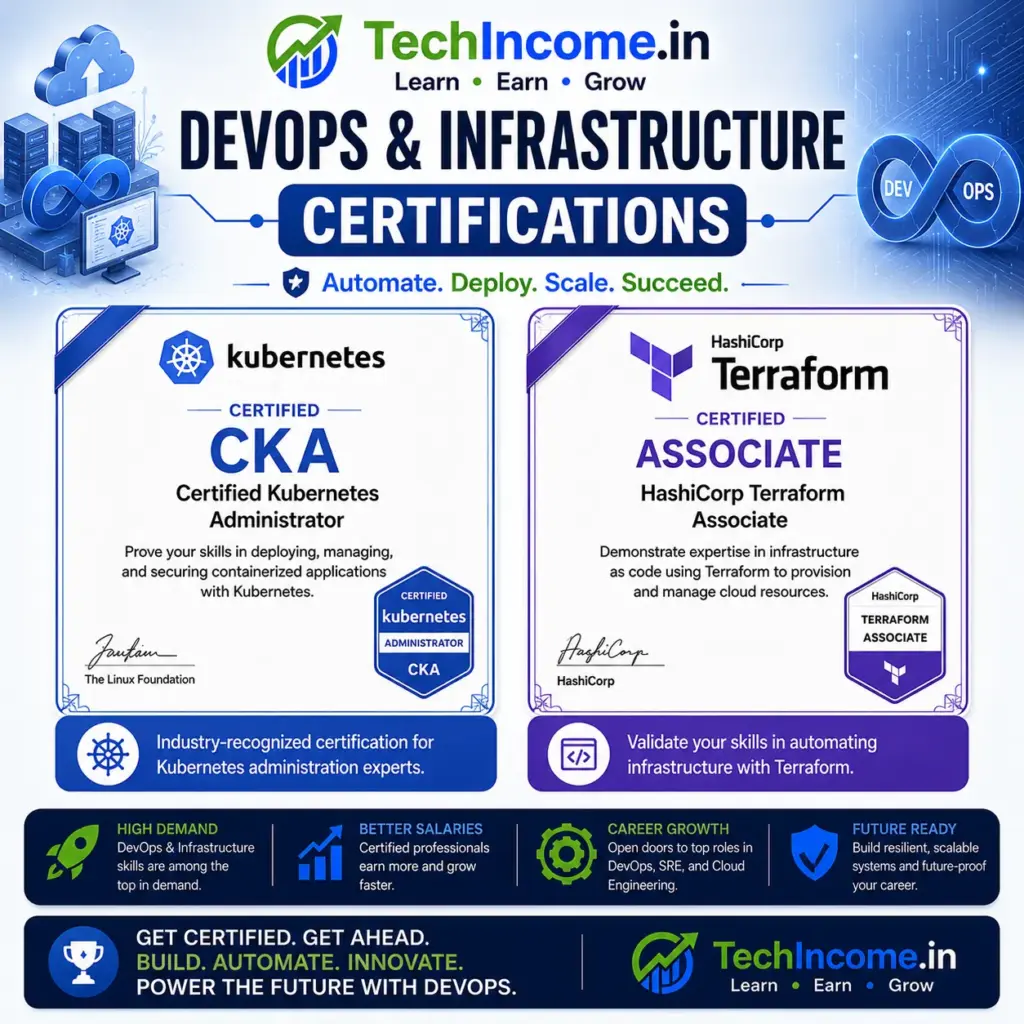
13. CKA – Certified Kubernetes Administrator
Best for: DevOps Engineers, Platform Engineers, Cloud Engineers working with containerised applications Exam fee in India: ~₹30,000–₹32,000 Preparation time: 2–4 months Salary range: ₹14–40 LPA
Kubernetes is the de facto container orchestration platform — if a company runs containers, they need CKAs — making this certification a consistent presence in DevOps and platform engineering job listings.
The CKA is a practical exam — you work in a real Kubernetes cluster under time pressure, solving 17 problems that test your ability to deploy workloads, configure networking, manage storage, troubleshoot broken clusters, and implement security controls. There are no multiple-choice questions. You either can do it or you can’t.
That’s what makes it genuinely respected. Any DevOps or Platform Engineer role at a product company in India that uses Kubernetes — which is nearly all of them — treats CKA as strong evidence of real-world container management ability.
Preparation: Mumshad Mannambeth’s CKA course on Udemy is the standard preparation resource. Killer.sh’s practice environment is the most accurate simulation of the real exam environment and is worth buying even at ₹4,000–5,000 because the real exam interface and pressure level is very similar.
14. HashiCorp Terraform Associate
Best for: Cloud Engineers and DevOps professionals who work with Infrastructure as Code Exam fee in India: ~₹10,000–₹12,000 Preparation time: 4–6 weeks Salary range: ₹12–30 LPA (alongside cloud platform skills)
Terraform is the most widely adopted Infrastructure as Code tool globally. It’s used by DevOps teams at product companies and GCCs to provision and manage cloud infrastructure in a version-controlled, reproducible way. The HashiCorp Terraform Associate certification validates that you know how to write Terraform configurations, manage state, use modules, and implement best practices.
It’s a relatively quick certification to earn — 4–6 weeks of focused study — and it adds meaningful signal to a cloud or DevOps resume. Many Indian job listings for Cloud Engineers and DevOps Engineers specifically mention Terraform skills, and the certification is the most credible way to prove them short of a large public project.
At approximately ₹10,000–₹12,000, it’s also one of the most cost-efficient certifications on this list relative to the signal it sends.
📊 Project Management & Enterprise IT
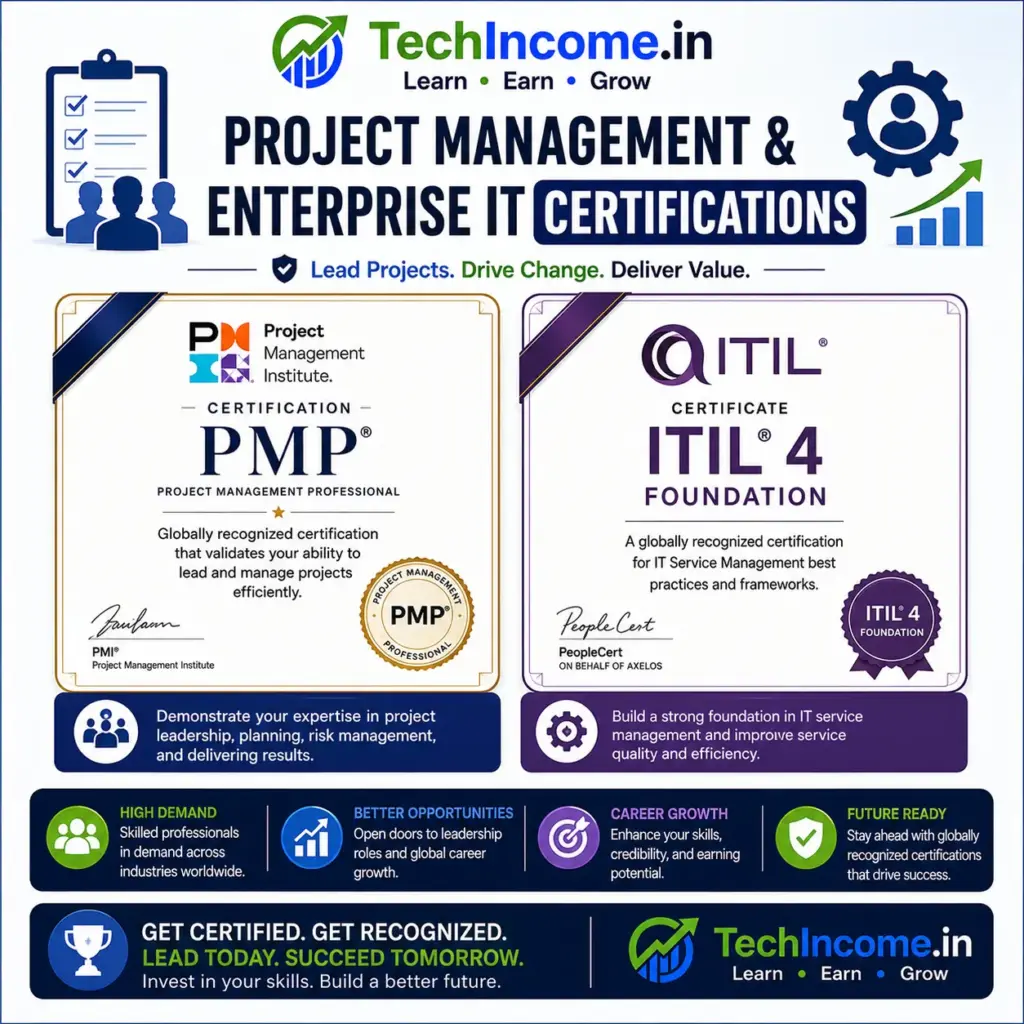
15. PMP – Project Management Professional
Best for: IT professionals with 3+ years of experience moving into project management or leadership Exam fee in India: ₹23,000–₹25,000 (PMI member rate) or ₹30,000+ (non-member) Preparation time: 3–4 months Salary range: ₹9–25 LPA
PMP is the universal language of project management — every company runs projects and PMP is timeless across domains.
PMP is relevant for IT professionals who are moving toward delivery management, program management, or IT leadership rather than technical specialisation. It’s not a technical certification — it’s a management certification. But it’s globally respected, widely required for senior project management roles at IT services companies and consulting firms, and the salary uplift in management-track roles can be significant.
The PMI requires 36 months of project management experience (with a degree) or 60 months (without) before you can sit the exam. This is not a fresher certification. If you’re 3–5 years into your IT career and leaning toward the management track rather than the technical track, PMP is the right move.
PMP is ideal for IT professionals aiming for management roles, with an average salary of ₹9–20 LPA.
16. ITIL 4 Foundation
Best for: IT professionals in service management, ITSM roles, or those joining large enterprises Exam fee in India: ₹12,000–₹15,000 Preparation time: 2–3 weeks Salary range: ₹6–18 LPA (alongside other skills)
IT service management isn’t glamorous, but it’s essential — ITIL is the global standard, and it’s a hidden gem because it’s required at large enterprises but many candidates overlook it.
ITIL 4 Foundation covers the framework that most large enterprises use to manage IT services — incident management, change management, problem management, service desk operations. It’s expected for roles in IT operations, service delivery, and ITSM at companies like Infosys, Wipro, IBM, and Accenture.
It’s not a high-complexity certification — most motivated candidates clear it in 2–3 weeks of study. But for roles in IT operations and delivery management, it’s often listed as a required qualification and an easy signal to add to your resume.
The Certifications That Are Not Worth Your Money in 2026
I’m including this section because nobody talks about it and it genuinely matters.
Microsoft Office Specialist (MOS): Listed on thousands of Indian resumes and valued by no IT employer. Basic office skills are assumed, not credentialed.
Random Python or Data Science “certificates” from small platforms: The market is flooded with “Python Certified Professional” and “Data Science Certified Expert” certificates from unrecognised platforms. Indian hiring managers do not weight these. A strong GitHub portfolio does more than ten of these combined.
Vendor certifications for tools your target employers don’t use: Getting a Salesforce certification is valuable if you’re targeting CRM roles. It’s pointless noise if you want to be a cloud architect. Match your certifications to the actual job requirements you’re targeting.
Entry-level certifications when you’re mid-career: An AWS Cloud Practitioner looks good on a fresher’s resume. On a 5-year IT professional’s resume, it signals underinvestment in your own development. Know which level of certification is appropriate for your experience.
How to Pick the Right Certification for Your Situation
Here’s the most practical framework I can give you — matched to where you are right now.
You’re a fresher with no IT experience: Start with AWS Cloud Practitioner (free to prepare, ₹12,000 exam) to understand cloud fundamentals, then immediately pursue AWS Solutions Architect Associate. If cybersecurity interests you, start with CompTIA Security+ instead. If data interests you, Google Professional Data Engineer after building 3–4 months of SQL and Python fundamentals.
You’re 1–3 years into an IT services or support role: AWS Solutions Architect Associate or Azure Administrator (AZ-104) depending on which platform your company uses. CKA if you’re working in any DevOps-adjacent role. CompTIA Security+ or CEH if you want to pivot to security.
You’re 3–5 years in and targeting a significant salary jump: AWS Solutions Architect Professional, Google Professional Cloud Architect, or OSCP (for security path). Any of these, combined with a job switch to a product company or GCC, can produce a 50–80% salary increase in a single move.
You’re 5+ years in and targeting leadership or senior specialist roles: CISSP for security leadership. CISM (Certified Information Security Manager) for security management. AWS Solutions Architect Professional or Google Professional Cloud Architect if you haven’t already. PMP if you’re on the management track.
The Truth About Certifications + Portfolio
Before I wrap up, I want to come back to what I said at the beginning.
Degrees alone are no longer sufficient — job-ready skills with hands-on projects matter most, and certifications like AWS Solutions Architect, CISSP, and Azure Expert significantly boost fresher salaries. Notice the framing there: certifications boost salaries when combined with job-ready skills — not as a replacement for them.
The professionals who get the best results from certifications are the ones who build something real alongside every certification they earn. Every AWS module you study — build the corresponding thing in your own AWS account. Every Kubernetes concept you learn for CKA — run it in a cluster on your laptop. Every ethical hacking technique you cover for CEH — practice it on TryHackMe.
That pairing — certification for credibility, portfolio for proof — is what gets you hired at the companies and salaries you’re actually aiming for. Either alone is less than the combination.
Cloud plus certification often increases salary by 20 to 35% — but the cloud skills demonstrated through actual projects are what employers remember after the interview.
The certifications on this list are all worth pursuing. None of them are shortcuts. All of them are tools — and like any tool, their value depends entirely on whether you know how to use them.
Quick Reference: All Certifications at a Glance
| Certification | Domain | Level | Exam Fee (India) | Salary Range |
|---|---|---|---|---|
| AWS Solutions Architect Associate | Cloud | Beginner–Mid | ₹20,000–22,000 | ₹8–18 LPA |
| AWS Solutions Architect Professional | Cloud | Mid–Senior | ₹35,000–38,000 | ₹20–45 LPA |
| Azure Solutions Architect Expert (AZ-305) | Cloud | Mid–Senior | ₹27,000–30,000* | ₹18–40 LPA |
| Google Professional Cloud Architect | Cloud | Mid–Senior | ~₹19,000 | ₹18–40 LPA |
| Google Professional Data Engineer | Data/Cloud | Mid | ~₹19,000 | ₹12–35 LPA |
| CompTIA Security+ | Cybersecurity | Beginner | ₹25,000–27,000 | ₹5–10 LPA |
| CEH | Cybersecurity | Beginner–Mid | ₹35,000–40,000 | ₹6–15 LPA |
| OSCP | Cybersecurity (Red Team) | Mid | ₹80,000–1,00,000 | ₹15–40 LPA |
| CISSP | Cybersecurity | Senior | ₹47,000–50,000 | ₹25–60 LPA |
| AWS ML Specialty | AI/ML | Mid | ₹35,000–38,000 | ₹18–45 LPA |
| Google Professional ML Engineer | AI/ML | Mid | ~₹19,000 | ₹18–50 LPA |
| Azure AI Engineer (AI-102) | AI/ML | Mid | ~₹13,500 | ₹14–35 LPA |
| CKA | DevOps/Platform | Mid | ₹30,000–32,000 | ₹14–40 LPA |
| Terraform Associate | DevOps/Cloud | Beginner–Mid | ₹10,000–12,000 | ₹12–30 LPA |
| PMP | Management | Mid–Senior | ₹23,000–30,000 | ₹9–25 LPA |
| ITIL 4 Foundation | ITSM | Beginner–Mid | ₹12,000–15,000 | ₹6–18 LPA |
*Combined cost of AZ-104 + AZ-305
techincome.in — honest career and income guidance for India’s tech professionals. Real numbers, practical roadmaps, no sponsored rankings.
Recommended Next Reads:
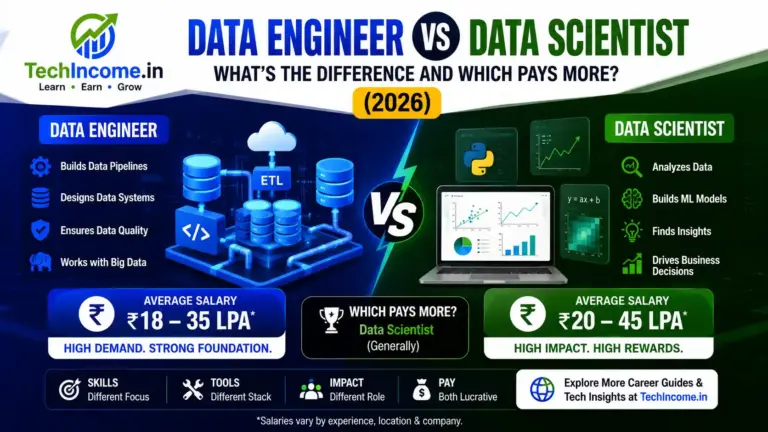
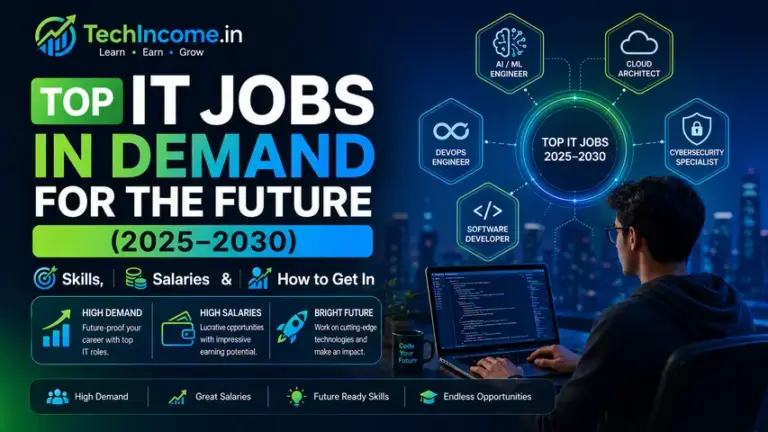
- Top IT Jobs in Demand for the Future
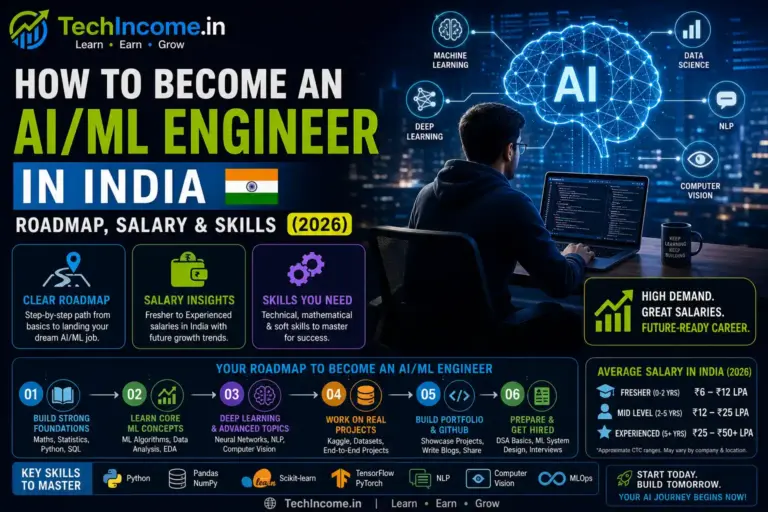
- How to become and AI ML Engineer in India
- Cybersecurity Career in India
✦ FAQs
Which IT certification is best for freshers in India in 2026?
For freshers entering cloud computing, AWS Certified Solutions Architect – Associate is the strongest starting point — it’s the most widely requested cloud certification in Indian job listings and opens doors at IT services companies, GCCs, and product firms. AWS Certified Cloud Practitioner and Solutions Architect Associate are excellent choices for beginners, with a salary expectation of ₹8–12 LPA per year for entry-level roles that can go significantly higher with experience and further certifications. For freshers interested in cybersecurity, CompTIA Security+ is the right entry point — vendor-neutral, widely accepted, and achievable without prior security experience. For data careers, building SQL and Python fundamentals first and then pursuing Google Professional Data Engineer gives the clearest path to a high-paying data role.
Q2. Do IT certifications actually increase salary in India?
Yes — with an important nuance. Certifications can boost salary by 20 to 30 percent over uncertified peers, and cloud plus certification often increases salary by 20 to 35%. The biggest salary jumps from certifications happen when you combine the credential with a job switch to a higher-paying employer — particularly from an IT services company to a product company or GCC, where the same certification can be worth 50–80% more in total compensation. Certifications alone, without demonstrated skills and a job switch strategy, produce smaller salary improvements. The full equation is: right certification + hands-on portfolio + strategic job switch = maximum salary impact.
Q3. Is AWS certification worth it in India in 2026?
Yes — AWS certifications remain the highest-value cloud credentials in India for job market purposes. AWS controls 32% of the cloud market and companies need architects who can design scalable, cost-efficient systems — AWS certified professionals appear consistently in hiring data as one of the most requested credentials across cloud roles. AWS Solutions Architect Associate is particularly worth it for anyone entering cloud. AWS Solutions Architect Professional and AWS Machine Learning Specialty carry significant salary premiums at mid-to-senior levels. The one situation where AWS certification is less of a priority: if your target employers are specifically Microsoft-heavy (large banks, insurance companies, Microsoft partners), in which case Azure certifications carry more weight.
Q4. Can I get an IT job with only a certification and no degree in India?
Yes, increasingly so. More than 80% of employers in India now prefer practical, project-based skills over just degrees, and companies are hiring based on skills, not degrees, in 2026. Certifications from recognised vendors — AWS, Microsoft, Google, CompTIA, (ISC)² — combined with a portfolio of real projects are sufficient to clear initial screening at many Indian IT companies, especially in cybersecurity, cloud, and data roles. The companies where a degree matters more are large IT services firms for certain roles and GCCs that maintain formal educational requirements in their job descriptions. The companies where it matters least are startups, product companies, and mid-size firms that prioritise demonstrated ability over credentials.
Q5. How many certifications should I have on my resume?
Depth beats breadth almost every time. One or two well-chosen, highly relevant certifications backed by real project experience are more impressive than five certifications with no demonstrable hands-on work. Hiring managers at product companies are skeptical of “certification collectors” — people who have five certifications but can’t answer practical questions in interviews. The right number depends on your career stage: one strong certification is appropriate for freshers, two to three is appropriate for mid-level professionals targeting senior roles, and senior professionals can carry more if each is relevant to the role they’re targeting. Quality and relevance matter far more than quantity.
Q6. What is the cheapest IT certification that still adds value in India?
HashiCorp Terraform Associate at ₹10,000–12,000 is one of the most cost-efficient high-signal certifications available. It validates Infrastructure as Code skills that are specifically mentioned in DevOps and Cloud Engineer job listings, and the exam fee is a fraction of AWS or Azure certifications. For cybersecurity, eJPT (eLearnSecurity Junior Penetration Tester) at approximately ₹8,000–10,000 is a practical, respected entry into ethical hacking at very low cost. ITIL 4 Foundation at ₹12,000–15,000 is inexpensive and required for many IT operations and service management roles at large companies. Google’s free certificates (IT Support, Data Analytics) are worth doing for learning but carry less hiring weight than vendor-specific technical certifications.
Q7. Is CISSP worth pursuing in India?
CISSP is worth pursuing if you have 5+ years of cybersecurity work experience and are targeting Security Architect, CISO track, or senior security consulting roles. CISSP is one of the most respected IT certifications in cybersecurity, with certified professionals earning ₹12–30 LPA in India — and at Senior Security Architect and CISO levels, the ceiling goes significantly higher. It is not worth pursuing as a beginner — the 5-year experience requirement exists for good reason, and the exam is designed for people who have operated real security programs, not those who just finished studying security concepts. Start with Security+ and CEH, build your experience, and revisit CISSP when the experience requirement is within reach.
Q8. Which certification has the best ROI for someone already working in IT?
For someone already working in IT with 2–5 years of experience, the certifications with the highest return on investment are typically: AWS Solutions Architect Professional or Google Professional Cloud Architect for cloud-track professionals (these certifications combined with a move to a product company or GCC can produce a 50–80% salary increase in a single switch); OSCP for anyone on the security-ethical hacking path (OSCP holders are consistently among the fastest-hired and best-compensated mid-level security professionals in India); and Google Professional Data Engineer for data-track professionals targeting product companies and GCCs. All three have high exam fees relative to basic certifications but produce salary jumps that pay back the investment within 1–2 months of being hired into a higher-paying role.
Q9. How do I prepare for AWS certification in India on a budget?
The most effective and budget-friendly preparation path for AWS Solutions Architect Associate is: Stephane Maarek’s course on Udemy (typically ₹499–649 during sales, which happen frequently) for video-based learning; AWS’s own free documentation and whitepapers for service-specific depth; AWS Free Tier for hands-on practice (many core services can be practiced at no cost within the free tier limits); and Tutorials Dojo practice exams on Udemy (approximately ₹649–799) for exam simulation. The entire preparation can be done for under ₹2,000 excluding the exam fee. The exam itself costs ₹20,000–22,000 and is the largest expense. Some employers reimburse certification fees for employees who pass — worth checking your company’s policy before paying out of pocket.
Q10. Should I get certified before or after gaining work experience?
Both simultaneously is the honest answer for most situations. Studying for a certification without applying anything hands-on leads to shallow knowledge that fades quickly and fails in practical interview questions. Working without pursuing certifications limits your earning potential and sometimes blocks your resume from being seen. The most effective approach is to study for a certification while simultaneously building related hands-on projects — use your AWS free tier account while preparing for AWS certification, do TryHackMe labs while studying for Security+, build data pipelines in BigQuery while preparing for Google Professional Data Engineer. This parallel approach produces both the credential for ATS filtering and the demonstrated ability that gets you hired once you’re in front of an interviewer.