

How to Write SEO Blog Posts That Rank in 2026
Ranking content in 2026 is not about inserting keywords—it is about fully solving a search query better than competing pages. Search engines evaluate usefulness, structure, and engagement signals.
This guide outlines a practical, repeatable process.
The Short Answer
To rank blog posts:
- Target the right keyword
- Match search intent
- Write comprehensive, structured content
- Optimize on-page SEO
- Build internal links
Execution quality determines results.
Step 1: Choose the Right Keyword

Start with low to medium competition, high-intent keywords.
Use tools like:
These two are my regular tools to figure out the best keywords out there, I regularly do a detailed research using these tools.
Focus on:
- Long-tail keywords
- Specific queries
Example:
- Weak: “blogging”
- Strong: “how to start a blog in India in 2026”
The short keywords are almost covered on the internet, so right now if you are starting then the long tail keywords are the only thing that will help you grow your blog.
Step 2: Understand Search Intent

Before writing, analyze what users expect.
Search the keyword combinations first yourself on google, and see if you are satisfied with the search results, is the intent completely satisfied? If you feel that you will have much more good content, and something better to provide to the reading audience, then you must go for the topic you intend to write on with such an intent.
Types:
- Informational → guides, tutorials
- Commercial → reviews, comparisons
Action:
Search your keyword and check:
- Top-ranking pages
- Content format
- Depth of information
Your content must match—and improve on—this.
You must think as if you are the reader, and you are exactly searching for a particular topic or query. Think that if you have power to be on the first search result, what type of content you would expect?
Step 3: Create a Strong Outline
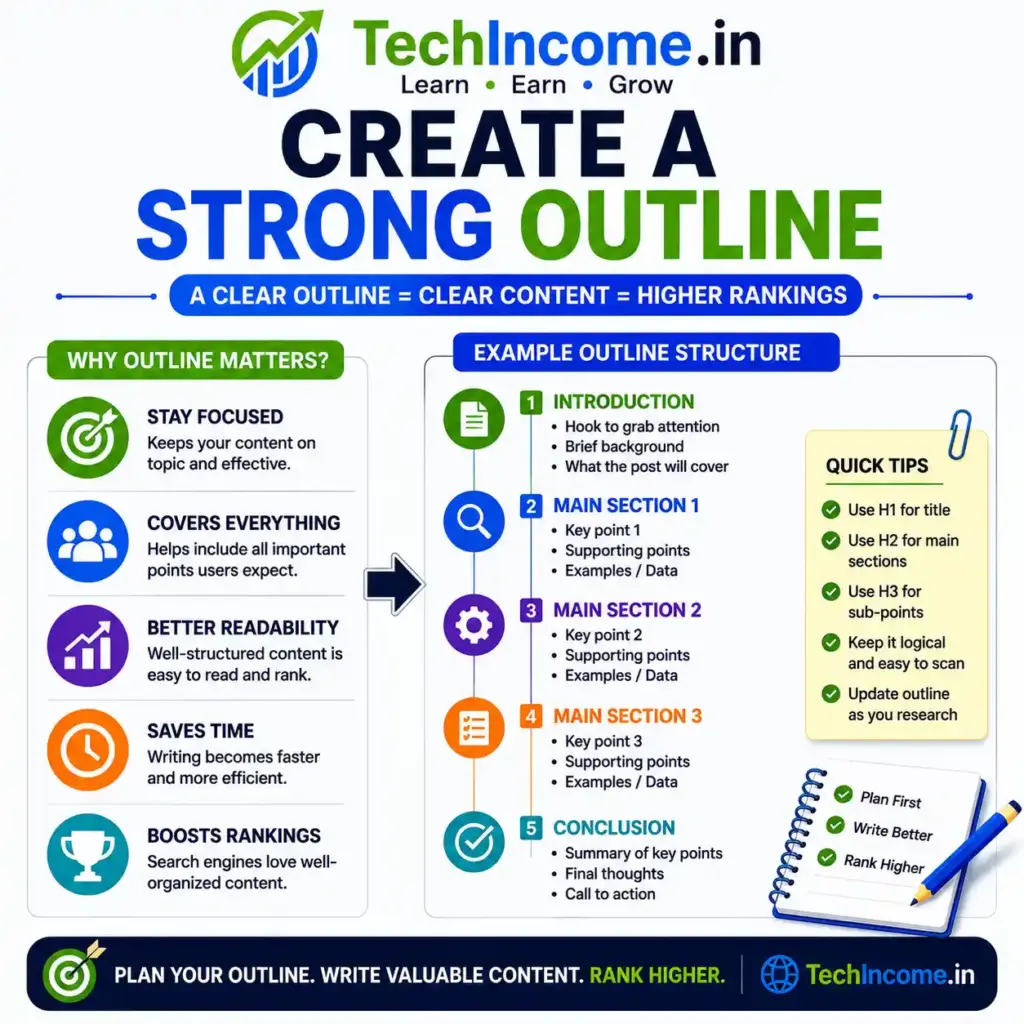
Structure determines readability and SEO.
Basic format:
- H1 → Main title
- H2 → Main sections
- H3 → Sub-points
Include:
- Introduction
- Step-by-step sections
- Examples
- FAQs
Do not start writing without an outline. Also consider including table of contents for you blogs so that users can easily navigate to the best parts of you blog post if they do not wish to read the whole blog. Including table of content helps user to identify early that if they read the full article, what are the curiosities or aspects about the topic that are going to be satisfied.
Step 4: Write for Clarity and Depth

Content must be:
- Easy to read
- Practical
- Complete
Guidelines:
- Short paragraphs (2–4 lines)
- Simple language
- No unnecessary filler
Content depth:
- 1000–2000+ words
- Cover topic fully
Sometimes while writing, you keep revolving around a point and the user gets bored reading it. You must think and plan your content in such a way that when a reader reads it, he/she must gain a strong informative knowledge base without getting overwhelming feeling about the topic.
Step 5: Optimize On-Page SEO

Use tools like:
- Rank Math
Key elements:
Title
- Include keyword naturally
First paragraph
- Mention keyword early
Headings
- Use keyword where relevant
URL
- Short and clean
Meta description
- Write manually
Avoid keyword stuffing.
I use rank math mainly for the schema management, its inbuilt Table of Contents block and FAQs block.
Step 6: Add Internal Links
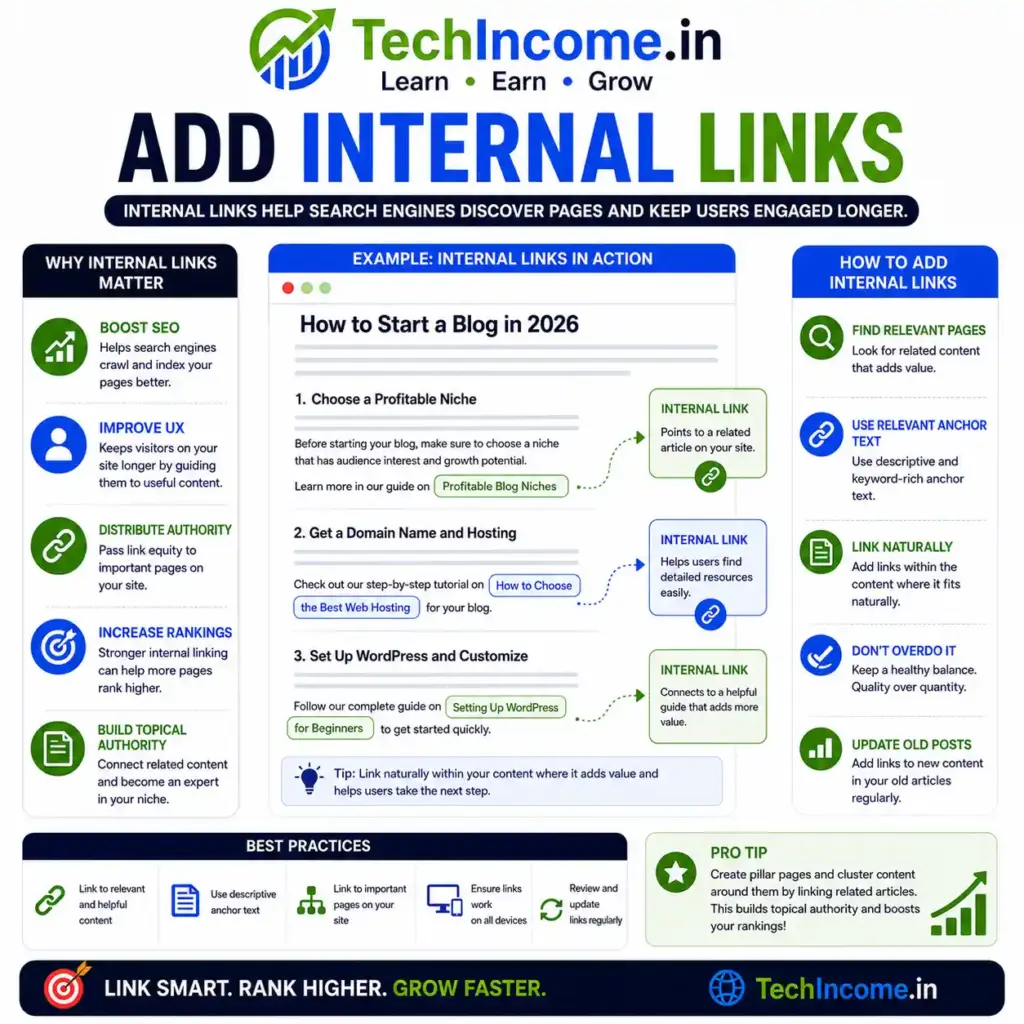
Internal linking improves:
- SEO
- User engagement
- Site structure
Best practice:
- Link to 2–5 related posts
- Use descriptive anchor text
I am still figuring out how to manage internal links. There should a plugin that can help visualize the blog in a tree or interconnected net like structure. So that the internal linking planning can be done. If you try to do it manually, it will take a lot of your time. Try different plugins and plan best internal links.
Step 7: Make Content More Valuable Than Competitors

This is where ranking happens.
Add:
- Examples
- Real scenarios
- Step-by-step clarity
- Common mistakes
Ask:
Does this article fully solve the problem?
If not, improve it.
You must provide what is not already there in the top ranking google articles.
Step 8: Improve Readability
User experience affects rankings.
Improve by:
- Using bullet points
- Breaking long paragraphs
- Adding clear headings
Avoid dense text blocks.
Use images and videos wherever necessary so that the user gets the best reading experience.
Step 9: Add Trust Signals

Search engines evaluate credibility.
Include:
- Accurate information
- Clear explanations
- Updated content
Ensure your site has:
- About page
- Contact page
Try to include your experience into the writings. The more natural knowledge and story telling you do, the more progress you get.
Step 10: Publish Consistently
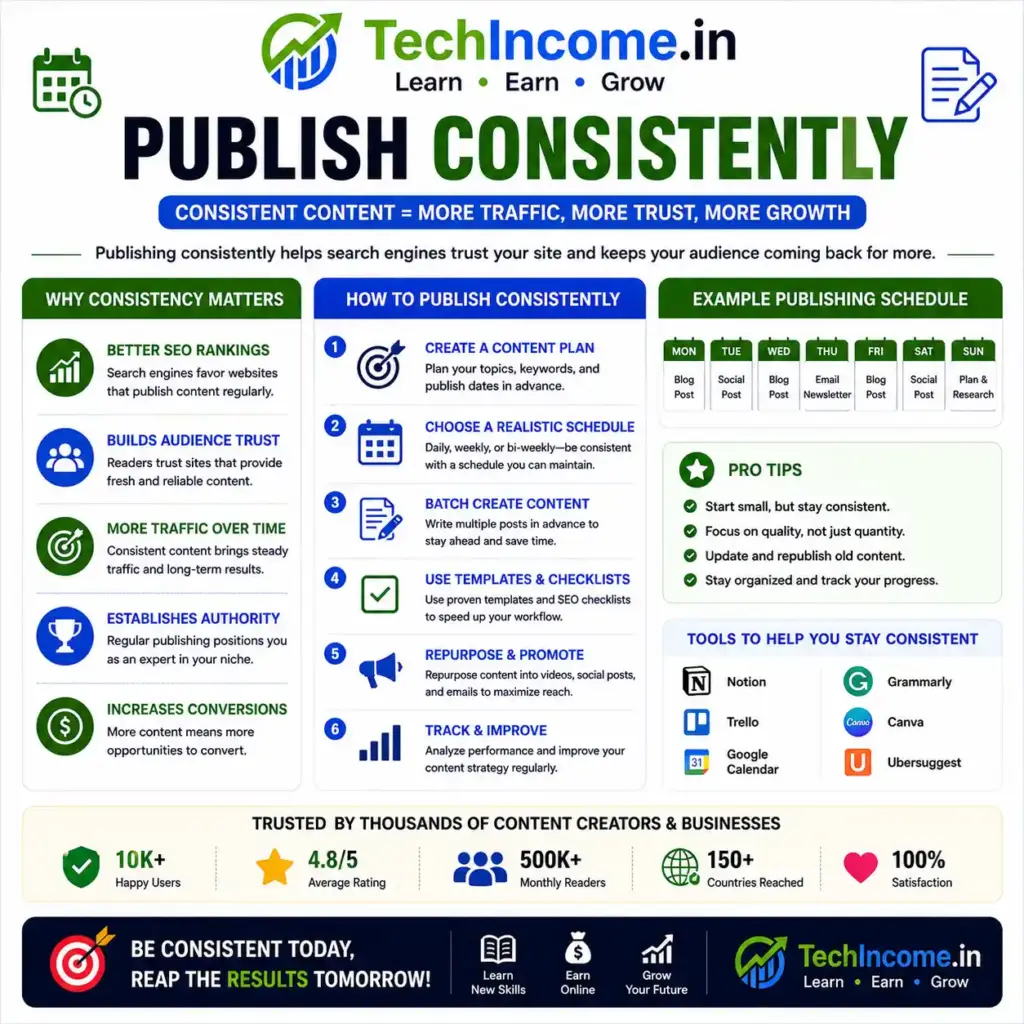
Ranking improves with:
- Content volume
- Topic authority
Target:
- 2–3 posts per week
- 30+ quality articles
Consistency always beats the inconsistent bursts of work. You must be consistent in posting the content. It applies to all the online platforms and also for anything you want to succeed in.
Step 11: Update and Improve Content

Ranking is not static.
After publishing:
- Monitor performance
- Update weak sections
- Improve clarity
This can significantly boost rankings.
If you post the best content and then you never take a look at it again, then you are doing it wrong. A good and successful blogger knows the importance of keeping the content up to date.
You must make necessary tweaks every now and then to you performing post to stay on the top.
What Actually Makes a Post Rank
Not just SEO tools.
Real ranking factors:
- Content usefulness
- User engagement (time on page, clicks)
- Topic authority
- Internal linking
Tools assist—they do not guarantee ranking.
If a user search for something and lands on your post, if he stays and gets something useful in return of the time spent on your website. It is a sign that you are moving towards success.
Now how would you know if the readers are liking your content and actually reading your content?
You should add google analytics to understand the user behavior
Common Mistakes to Avoid
- Writing without keyword research
- Ignoring search intent
- Publishing thin content
- Over-optimizing keywords
- No internal linking
If you avoid basic mistakes and do just the right and simple things, no one is going to stop you from the getting the success.
Ideal Workflow
For every post:
- Keyword research
- Analyze competitors
- Create outline
- Write content
- Optimize SEO
- Add internal links
- Publish
- Update later
Following this strictly and see what is waiting for you in the long run.
Example Structure (Quick Template)
- Introduction
- What is [topic]
- Why it matters
- Step-by-step guide
- Common mistakes
- FAQs
- Conclusion
Final Verdict
SEO writing in 2026 is about:
- Clarity
- Depth
- Intent alignment
Not tricks. Just consistency and satisfying content.
If your content is the best answer to the query, it can rank.
I also thought that it is hard and overwhelming. But the day I understood that if I do one improvement daily, it becomes very easy to make your every content rank.
Recommended next reads:
- https://techincome.in/on-page-seo-checklist-beginners-2026/
- https://techincome.in/keyword-research-ahrefs-beginner-guide/
- https://techincome.in/how-to-use-rank-math-for-seo/
- https://techincome.in/get-blog-traffic-without-backlinks-2026/
- https://techincome.in/blog-post-structure-increase-time-on-page-2026/
- https://techincome.in/how-to-start-a-blog-in-2026-step-by-step-guide/
FAQs: How to Write SEO Blog Posts That Rank in 2026
-
How long should an SEO blog post be in 2026?
Write for readers first, then optimize for search engines. Content that satisfies users tends to perform better long term.
-
Should I write for search engines or readers first?
Write for readers first, then optimize for search engines. Content that satisfies users tends to perform better long term.
-
How many times should I use my keyword in a blog post?
Use it naturally where relevant. Focus on clarity and context instead of keyword density.
-
Is AI-generated content bad for SEO?
Not necessarily. Low-quality, generic AI content performs poorly, but edited, experience-based, and valuable content can still rank well.
-
How important are headings in SEO writing?
Very important. Proper headings improve readability, help structure content, and make it easier for search engines to understand the topic.
-
Do new blogs have a chance to rank in competitive niches?
Yes, but targeting long-tail and lower-competition keywords is usually more effective in the beginning.
-
Should every blog post target a different keyword?
Yes. Each post should focus on one primary topic or keyword to avoid content overlap.
-
How many internal links should I add to a blog post?
Usually 2–5 relevant internal links are enough for most beginner blog posts.
-
How long does it take for an SEO blog post to rank?
It depends on competition, authority, and keyword difficulty. Some posts may rank in weeks, while others take months.
-
Do images help SEO rankings?
Images improve user experience and engagement. Optimized images with proper alt text can also support SEO indirectly.
-
Should I update old blog posts for SEO?
Yes. Updating outdated information, improving structure, and adding new insights can improve rankings over time.
-
Can a blog post rank without backlinks?
Yes, especially for low-competition keywords and well-structured content. Strong topical authority and internal linking also help.